.png)

Inverter ACs suit daily use with higher efficiency, stable cooling, and lower electricity bills over time.
Non-inverter AC is suitable for occasional use, with a lower upfront cost but higher running expenses during extended use.
Your choice depends on usage hours, budget, and long-term electricity savings rather than initial price.
Air conditioners have moved from luxury to necessity in India. Summer usually lasts longer, with temperatures consistently registering well above 40°C in many parts of the country. Heatwaves are more common now, especially in northern and central India, making life without air conditioning a real challenge.
However, choosing between an inverter AC and a non-inverter AC is not merely an economic choice. It greatly affects electricity bills, cooling consistency, and long-term costs. Many buyers still focus only on the purchase price and overlook the frequency of AC usage and its running costs over time.
Inverter AC
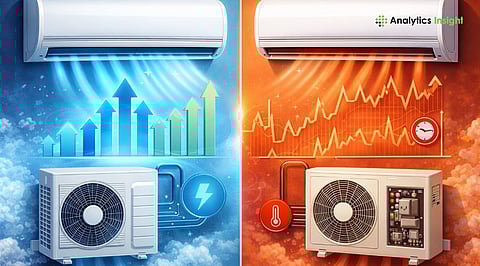
Inverter ACs can regulate their compressors based on ambient temperature. Unlike conventional air conditioners, these products work continually at varying speeds. This makes inverter ACs much more energy-efficient.
Key advantages of inverter ACs:
Uses only the required power, which helps lower electricity bills
Maintains steady cooling without sudden temperature changes
Puts less stress on the compressor, which can extend its life
Runs quieter since there are no frequent start-stop cycles
LG 1.5 Ton 5 Star DUAL Inverter Split AC
LG 5 Star Convertible Split AC (US-Q19BNZE1) is a great product for individuals who want highly effective cooling without compromising energy efficiency. The split air conditioner utilizes twin inverter technology that not only reduces electricity usage greatly but also ensures smooth operation with low noise levels.
Also Read: Amazon Weekend Sale: Big Discounts on Daikin Inverter Split AC
In a non-inverter AC, the compressor operates at a fixed speed. The compressor starts and stops depending on the temperature regulation. When cooling, it operates at full capacity until the task is completed. The continuous process leads to high energy consumption and results in uneven cooling.
Key features of non-inverter ACs:
High energy consumption
Irregular cooling
Low initial cost
Produces noise
Daikin 1.5 Ton 3 Star Fixed Speed Split AC
Daikin 1.5 Ton 3 Star Fixed Speed Split AC provides efficient cooling for regular-sized rooms. Its quick-cooling action saves on electricity and maintenance costs. The durability makes it the best long-term purchase.
Also Read: Amazon Great Summer Sale: Top Deals on Non-Inverter ACs from Voltas & Daikin
Choose an inverter AC if you:
Use the AC daily for long hours
Want steady cooling without temperature swings
Aim to reduce electricity bills over time
Prefer quieter operation after initial cooling
Choose a non-inverter AC if you:
Use the AC occasionally or for short durations
Want a lower upfront cost
Need it for a room with limited space
An inverter AC is more beneficial for most households. It operates efficiently daily, maintains consistent coolness, and reduces monthly electricity bills. In addition, the higher initial price feels reasonable when one starts using the appliance.
The non-inverter AC is relevant if you don’t use the machine regularly or require something affordable for a secondary bedroom. The right investment today will save you from high operating expenses in the future.
1. What is the difference between an inverter and a non-inverter AC?
Inverter AC adjusts compressor speed for consistent cooling and efficiency, while non-inverter AC switches on and off, consuming more power and causing temperature fluctuations.
2. Which AC is better for electricity savings in India?
Inverter ACs save more electricity over time due to variable-speed compressors, making them ideal for long daily use, especially during the extended Indian summer months.
3. Is a non-inverter AC cheaper to maintain?
Non-inverter ACs usually cost less upfront and have simpler technology, but higher electricity bills over time can make them more expensive in the long run.
4. Which AC type cools faster, inverter or non-inverter?
Non-inverter ACs cool faster initially at full power, but inverter ACs maintain steady temperatures better, offering more comfort and consistent cooling after reaching the desired temperature.
5. Are inverter ACs worth the higher price in 2026?
Yes, inverter ACs justify higher upfront costs through lower electricity bills, quieter performance, and longer lifespan, especially for households using air conditioners regularly throughout summer.
