.png)

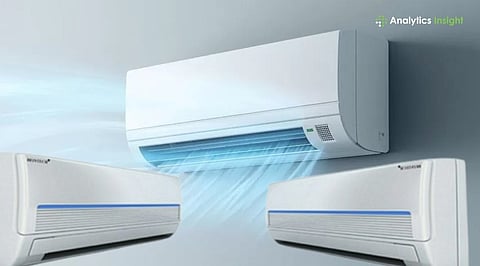
Air conditioners have become significantly more energy-efficient in recent years, especially with inverter technology that reduces electricity consumption.
Modern ACs now focus on faster cooling, quieter operation, and flexible cooling modes that adapt to different room sizes.
Choosing the right capacity and energy rating can directly impact electricity bills and long-term maintenance costs. After comparing several popular models, I focused on real-world factors like cooling speed, noise levels, durability, and overall value.
Extreme heat has made air conditioners one of the most important appliances in modern households. Buyers nowadays don’t only look for powerful cooling; they want energy-efficient models to reduce electricity bills in the long term. However, with hundreds of options available on the market, selecting the right AC can be confusing. Many models appear similar at first, but their real-world performance varies widely.
To make the situation a bit easier, I have compared ACs from some of India’s most popular brands. The goal was to analyze their everyday performance, including how quickly each unit cooled a room, how consistently it maintained the temperature, and how comfortable it felt during extended use. These details make the biggest difference for the homeowners.
Price: Rs. 42,990 (approx.)
Key Specifications
Convertible 5-in-1 technology
Hot & Cold Function
Dual Inverter Compressor
HD Filter with Anti-Virus Protection
I found this model to be one of the finest I have tested. The ability to switch between cooling and heating makes it highly relevant year-round. However, what impressed me more was its performance and flexibility. Whether the temperature is extremely high or moderately warm, the cooling system adjusts accordingly. For those who are looking for an all-season solution, this model feels like a practical long-term investment.
Also Read: AC Room Size Calculator: Which AC Capacity Do You Need?
Price: Rs. 38,490 (approx.)
Key Specifications
4-IN-1 Adjustable Mode
Max Cooling Goes Up to 52°C
Anti-Dust Filter with Anti-Microbial Coating
Memory Restart, Anti-freeze Thermostat
The Voltas model is a great choice if you are looking for an efficient AC at a budget-friendly price. Voltas has always been renowned for handling extreme heat, and this model lives up to the expectations. I have found its cooling performance impressive, even when the outdoor temperature was pretty high.
The Voltas model indeed lacks advanced features, but its performance is unquestionable. For people looking for dependable cooling without overspending, this is a safe choice.
Price: Rs. 34, 490 (approx.)
Key Specifications
PM 2.5 Filter
Dew Clean Technology
Triple Display
Coanda Airflow
Daikin is one of the oldest brands on the market, with a range of products that deliver solid performance. During the test, what impressed me most about the model was its durability. The cooling is steady, and the unit operates smoothly without sudden temperature fluctuations. Even if the session was long, the AC remained consistent.
Price: Rs. 41,990 (approx.)
Key Specifications
Convertible 6-in-1 Technology
Smart Energy Display
Hydro Blue Coating for Long Lasting Comfort
Refrigerant Leakage Detector
The Carrier model is undoubtedly among the most energy-efficient I have tested. The Flexicool technology allows users to adjust cooling capacity depending on room conditions. This helps reduce electricity consumption over time.
I specifically appreciate the balanced performance and efficiency. The cooling system is quick, and it adapts well to changing temperatures. If you want to reduce power bills, this model is one of the smartest investments to make.
Price: Rs. 33,290 (approx.)
Key Specifications
Convertible 6-in-1 Cooling
4 Way Swing
HD Filter with Anti-Virus Protection
Max cooling reaches 52 degrees
Not every home requires a large air conditioner, and a 1 Ton AC perfectly suits medium rooms. Among the smaller models, this LG 1 Ton AC stands out as a compact, efficient, and particularly suitable option. One can easily consider it for their bedrooms in a small apartment. During the testing period, I found the cooling was quick, and the noise level remained low throughout. For smaller spaces, this model offers a practical balance between performance and energy efficiency.
The best air conditioner can’t be a one-size-fits-all. It depends on your room size, usage pattern, and electricity budget. While some people prefer cooling power, others prefer energy savings or durability.
After comparing all these models, two units have stood out for their overall performance. So, my first recommendation is the LG 1.5 Ton Hot & Cold AC. Its model offers reliable cooling and year-long usage at a mid-range price.
The next one I would recommend is Carrier 1.5 Ton Flexicool AC. This model offers excellent energy efficiency and consistent cooling. So, it is one of the best ACs for daily home use.
Also Read: Best Energy-Efficient AC in India: 5-Star vs 3-Star AC Comparison
In the last few years, air conditioning technology has evolved rapidly. The integration of modern inverter systems now offers faster cooling, lower energy consumption, and improved temperature control compared to older models.
From my experience, the most important factors to consider are reliability, energy efficiency, and ease of maintenance. If an air conditioner performs well in these areas, it can deliver long-term comfort without unnecessary costs.
1. Which AC is best for a typical Indian bedroom or living room?
Ans: A 1.5-ton inverter AC is usually the best choice for most Indian bedrooms and medium-sized living rooms between 120 and 180 square feet. It provides balanced cooling without excessive power consumption.
2. Is a 5-star AC always better than a 3-star AC?
Ans: A 5-star AC generally consumes less electricity than a 3-star model, which can lead to lower monthly power bills over time. However, the difference becomes more noticeable if the AC is used for long hours every day. If your usage is moderate, a good 3-star inverter AC can still offer excellent performance and value.
3. How much electricity does a 1.5-ton inverter AC typically consume?
Ans: A 1.5-ton inverter AC usually consumes around 0.8 to 1.5 units of electricity per hour, depending on factors such as room size, insulation, outdoor temperature, and usage settings. Energy-efficient models with higher star ratings and inverter technology can significantly reduce overall electricity consumption.
4. Are inverter ACs really worth buying in 2026?
Ans: Yes, inverter ACs are worth buying because they automatically adjust the compressor speed to maintain the desired temperature. This reduces energy consumption, improves cooling consistency, and lowers noise levels.
5. How often should an air conditioner be serviced?
Ans: An air conditioner should typically be serviced once every 6 to 12 months to maintain optimal performance. Regular servicing helps clean filters, check refrigerant levels, and prevent performance issues. Homes in dusty or high-usage environments may benefit from more frequent maintenance.
