.png)

Early survival horror games relied on fixed cameras, slow movement, and limited inventory.
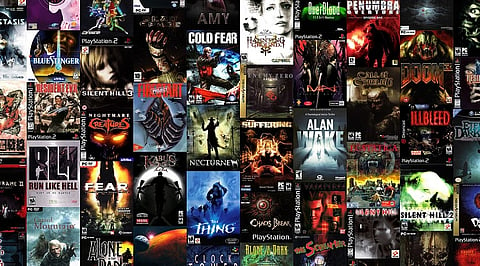
Silent Hill, Resident Evil 4, Dead Space, Outlast, and Amnesia changed the way horror games were designed.
AI, VR, and smarter enemy behavior are now taking the genre in a new direction.
Horror games always hit different. They are never about feeling powerful; they are generally about walking into a dark corridor without knowing what’s inside. A strange sound, a flickering light, or an empty hallway can make players nervous even before anything happens.
This is why survival horror has stayed popular for so many years. Every generation has found a new way to scare players. Better graphics certainly helped, but the biggest changes came from game design. Developers slowly learned that fear comes from uncertainty, not just monsters.
The genre has changed a lot since the 1990s. Camera angles are different now, combat feels smoother, stories are deeper, and enemies react in smarter ways. Even so, the main goal has stayed the same. Every game wants players to feel nervous from beginning to end.
The survival horror games of the 1990s were very different from what we play today. Games like Resident Evil used fixed camera angles. Players could not freely move the camera, so they often had no idea what was waiting around the next corner. This simple design made every step feel risky.
Movement was slower as well; the characters took their time turning and running. Fighting was never easy, and there was not much ammunition. Players had to think before they fired a single bullet, because there were never enough supplies. Inventory space made it harder to survive. You could carry a handful of weapons, healing items, or keys. One item picked up meant another item left behind.
Then Silent Hill came along, and the genre changed a lot. The first time, players saw a game that didn't rely on monsters. Instead, it focused more on fear within the human mind. For example, a thick fog hung over the town, strange noises came from the streets, and slowly the story immersed players in a disturbing mystery. It is still regarded by many fans as one of the best psychological horror games ever made.
The next major step arrived with Resident Evil 4. When it came in 2005, gamers found that they could move camera angles to see the entire room or landscape, which made combat smoother, aiming easier, and players got more control during fights. Many action games later followed the same style.
Other games also pushed the genre forward. Dead Space made every fight feel dangerous by asking players to target enemy limbs instead of simply shooting. Amnesia: The Dark Descent and Outlast removed weapons for most of the game. Instead of fighting, players had to hide or run. This made every encounter feel much more stressful.
Inventory systems also improved during these years. Developers gave players a little more freedom while still making resources valuable. The balance felt much better than before.
Also Read: Best Horror Games Set During WW1 and WW2
Recent psychological horror games are becoming smarter in ways players notice almost immediately. Earlier enemies followed simple paths. Once players learned those patterns, many scary moments became easy to predict.
Modern games are changing this. Enemies now react differently depending on what players do. Some search rooms more carefully. Others listen for sounds or follow movement. This makes every encounter feel less scripted and much harder to predict.
AI is also helping developers behind the scenes. AI can test game systems, find bugs faster, and improve enemy behavior before launch. Developers still design the experience themselves, but AI helps them speed through many tasks.
Virtual reality has changed the experience of horror as well. Players aren’t watching the game on a screen; they’re in the game by wearing a VR headset. Walking through dark houses or hearing footsteps behind you feels much more real. Games like Resident Evil Village VR demonstrate this experience.
Modern survival horror games also blend different styles together. Many combine action, puzzles, exploration, and stealth rather than relying on only one kind of gameplay. This keeps players interested for much longer time.
Camera systems have become more flexible too. Some games use first-person views to make players feel closer to the action. Others still prefer third-person cameras because they offer a wider look at the surroundings.
Enemy behavior has improved more than anything else. Creatures no longer wait in one place for players to arrive. They react, chase, search, and sometimes even surprise experienced players. These small details make every playthrough feel different.
Also Read: Top 10 Roblox Horror Games to Play With Friends in 2025
Survival horror has changed a great deal over the last thirty years. It started with fixed cameras, simple controls, and small maps. Today, players explore detailed worlds filled with realistic sounds, emotional stories, and smarter enemies.
The genre might go further in the next few years. Better AI may allow enemies to learn from the player’s actions, rather than following a set routine.
Still, technology alone cannot generate fear. Good stories, good places, and smart game design will always beat graphics. Players may forget what a game looked like, but they rarely forget the fear they felt while playing it.
What made survival horror games unique in the 1990s?
Ans: Fixed camera angles, slow movement, limited inventory, and careful resource management made every moment feel tense.
Why is Silent Hill so important?
Ans: It focused on psychological fear and emotional storytelling instead of only using monsters and action.
How did Resident Evil 4 change horror games?
Ans: It introduced an over-the-shoulder camera, smoother combat, and a fresh style that inspired many later games.
How is AI changing survival horror today?
Ans: AI helps create smarter enemies, improves testing, and makes gameplay feel less predictable.
What can players expect from future horror games?
Ans: Future games will likely feature better AI, stronger stories, improved VR, and more realistic enemy behavior.
