.png)

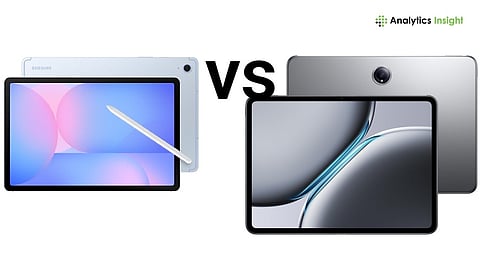
Samsung tablets are ideal for students needing note-taking, S Pen support, and productivity features like DeX, making them perfect for academic-focused use.
OnePlus tablets offer faster performance, smoother displays, and quicker charging, making them great for multitasking, coding, and entertainment.
Choose Samsung for study productivity and long-term value, while OnePlus is better for speed, performance, and budget-friendly all-around usage.
Choosing the right tablet for studies has become important as students use these devices to attend online classes, read PDFs, make notes, watch lectures, and work on projects every day. OnePlus and Samsung are the leading brands in this space. Both offer great products with fast connectivity, large displays, and features that support a learner’s needs.
However, the comparison helps narrow down the choice as some students need a tablet for handwritten notes, research, and assignments, while others require strong performance for multitasking, media editing, and coding practice. This article explains the distinction between Samsung and OnePlus tablets to help students make the final decision.
Samsung tablets offer a digital notebook experience. Devices like the Galaxy Tab S10 FE+, Galaxy Tab S10 Lite 5G, and Galaxy Tab S9 FE 5G come with S Pen support for smooth and highly precise writing. This is useful for making class notes, solving diagrams, practicing graphs, highlighting textbooks, and naturally writing long answers.
Samsung also strengthens the learning experience with DeX mode, which provides a desktop-style layout. This allows students to open multiple apps, prepare presentations, work on assignments, and manage research tabs more comfortably. The large AMOLED screens in premium models like the Galaxy Tab S11 Ultra also help during long reading sessions, as the display remains sharp and comfortable.
Another strong point is durability and long-term value. Tablets like the Galaxy Tab S9 FE 5G offer IP68 water and dust resistance. Samsung also provides strong software support, which keeps the tablet updated for years and makes it a better long-term academic investment.
Also Read: Top Tablet Deals on Amazon Weekend Sale: iPad, OnePlus, and More
OnePlus takes a different but equally useful approach. The brand focuses more on speed, display quality, and value for money. Tablets such as the OnePlus Pad 3, OnePlus Pad 2, and OnePlus Pad Go 2 bring powerful processors, large batteries, and high refresh rate displays that feel extremely smooth during multitasking and lecture streaming.
For example, the OnePlus Pad 3 offers a 13.2-inch 3.4K display with a 144Hz refresh rate and Snapdragon 8 Elite processor, which makes heavy apps, split-screen use, coding platforms, and video editing run without lag. Students who use demanding apps often find this kind of power very useful.
The answer depends on how the tablet will be used in student life.
Samsung is the better choice for note-taking, handwritten assignments, research work, and overall academic productivity. The S Pen is one of the biggest reasons students prefer Samsung, as it offers a more natural writing feel. Features like Samsung Notes, DeX mode, and strong Android ecosystem support improve the experience for students who already use Samsung phones or laptops.
OnePlus is the better option for students who want speed and better hardware value in the same budget. The brand usually offers faster charging, stronger processors, and smoother displays than many similarly priced Samsung models. The OnePlus Pad 2, for instance, combines Snapdragon 8 Gen 3 power with a 3K display and strong battery life, making it excellent for students who attend long lectures, use creative apps, or enjoy gaming in their free time.
Also Read: Top Tablets With All-Day Battery Life in 2026
Battery performance also plays an important role here. OnePlus usually offers 67W to 80W charging support, which means the device charges much faster than many Samsung tablets. This helps students who move between college, coaching, libraries, and travel sessions throughout the day.
Samsung clearly leads when used for academic productivity, while OnePlus feels like a better option for performance and value.
Students who need the best note-taking experience, better multitasking tools, longer software support, and a premium writing setup should choose Samsung. On the other hand, students who want fast performance, smooth displays, large batteries, and better charging speeds at a more attractive price should choose OnePlus.
In simple terms, Samsung is better for study-focused productivity, while OnePlus is better for speed-focused smart value. The better brand depends on whether studies need a notebook replacement or a high-performance all-rounder that handles both learning and entertainment smoothly.
1. Which tab is better, Samsung or OnePlus?
Ans. Both brands are good, but serve different needs. OnePlus tablets offer better performance, faster charging, and value for money. Samsung tablets provide premium OLED displays, better software features like DeX, and longer support, making them ideal for productivity and long-term use.
2. Is OnePlus Pad Go 2 better than Samsung Tab S10 Lite?
Ans. The OnePlus Pad Go 2 is better for media and gaming with a larger 12.1-inch 120Hz display and a larger battery. The Samsung Tab S10 Lite is lighter, more portable, and includes an S Pen, making it better for note-taking and productivity tasks.
3. Is OnePlus better than Samsung?
Ans. OnePlus is better for performance, fast charging, and affordability. Samsung is better overall for camera quality, software support, ecosystem, and premium features. Choosing between them depends on whether you prefer value and speed or a more complete flagship experience.
4. Are Samsung tablets good for schoolwork?
Ans. Yes, Samsung tablets are very good for schoolwork. With features like DeX mode, S Pen support, and compatibility with Office apps, they can replace a laptop for tasks like note-taking, assignments, presentations, and online classes.
5. Why is OnePlus cheaper than Samsung?
Ans. OnePlus devices are cheaper because the brand focuses on performance and cuts costs on marketing, ecosystem features, and sometimes premium materials. Samsung invests more in displays, cameras, software updates, and brand presence, which increases overall pricing.
