.png)

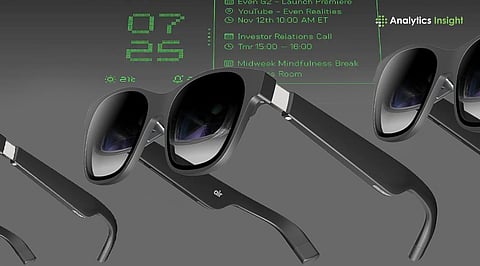
Find out about the best AR glasses that go hand in hand with smart wearables.
Look through features, ease of use, and examples of the AR glasses' use in real life.
Choose the most suitable smart glasses for work and personal life
AR glasses are a step ahead in changing the users' interaction with digital content. These gadgets superimpose the digital content over the users and visually improve areas like productivity, navigation, and entertainment. The newest smart wearables give special weight to their design, being light, having a better power source, and connectivity that is without any flaw.
In this write-up, we will look at the best AR glasses in 2026 and also guide users on deciding the right device for their daily routines and advanced applications.
Due to their features, compatibility with the leading mobile operating systems makes complex tasks simpler, walking and turning while listening or interacting with a virtual character becomes natural, and the capability to switch between private and public modes. These smart glasses are the best in the AR glasses category.
Apple is rumored to rescue the augmented reality ecosystem with a pair of stylish smart glasses lighter and smaller than last year's prototypes, integrated tightly with the full gamut of Apple technologies, including iPhone, Apple Watch, and AirPods. Convenience, reliance on effortless user interaction, and relatability within Apple devices are the focal points of these glasses.
Innovative display unit and the use of spatial computing to enhance the user experience will be some of the remarkable aspects of the product.
Meta does not stop at enhancing its smart glasses with an upgraded camera and developing its voice command option. Users can take pictures, make videos, and even communicate with smart assistants using these glasses. With better looks and comfort, they will easily fit for daily usage as well as for social encounters.
With a pair of ultra-lightweight Augmented Reality glasses, the Xreal Air 2 Pro aims to take your display experience to the next level. By working together with a smartphone or laptop, the user is given a super-sized virtual screen.
For watching films, playing video games, or doing office work, these glasses are just the ticket.
Microsoft is gearing up its AR glasses for enterprise user segments mainly. These glasses have been sculpted to serve the industrial sector, with a focus on staff training and design-oriented workflows.
Through higher-quality spatial mapping and increased efficiency, interactions with digital elements in the real world have become more seamless.
Among the features Vuzix Blade 2 offers are main AR practical uses, such as notifications, navigation, and display of information in real-time. The device's target market is business and professional users.
Besides designing the product for long hours of wear, the engineers enriched it with reliable performance.
With its advanced features, the device is a great fit for professional use, especially for those performing data analysis, design, or remote collaboration jobs.
They can get connected to the PC and support even complicated workflows via the multiple virtual displays that the glasses offer.
Designed mainly for personal entertainment and usage, Rokid Max offers a virtual screen at large size for content viewing and gaming.
In addition to eye-catching looks, features such as lightness and high resolution make this a user-friendly product.
The RayNeo X2 is the first to launch built-in processing and navigation features that make it a standalone AR. It also extends support to the real-time translation and smart assistant functions.
This product is directed at the smart wearable functionality that comes with everyday usability.
Choosing the right AR glasses depends on understanding the features that directly impact usability, comfort, and performance in real-world scenarios.
Display Quality: High-resolution displays ensure clear visuals, better readability, and an immersive viewing experience.
Comfort and Design: Lightweight frames and balanced design improve long-term usability without strain.
Battery Life: Efficient battery performance supports extended usage during travel or work.
Connectivity: Compatibility with smartphones, laptops, and apps enhances functionality and flexibility.
Use Case Support: Features such as navigation, media viewing, or enterprise tools determine practical value based on user needs.
Peering ahead into 2026, top-tier smart glasses sharpen how you see and move through daily life. Whether it's Xreal pushing powerful visual overlays or Meta slipping quiet smarts into Ray-Ban frames, one fit clicks just right for each way of living. With tech getting tinier by the month and brains behind them expanding fast, these gadgets are edging closer to must-have status. Owning a solid pair now? That's stepping onto the path where phones may soon trail behind.
1. Do AR glasses always need to be connected to a smartphone?
Lightweight models in 2026 will still mostly depend on a smartphone for processing and data. Some enterprise models may have Wi-Fi and 5G connectivity that allows them to be independent.
2. Are smart glasses compatible with prescription lenses?
Absolutely; the majority of brands either allow you to use magnetic prescription lenses or they can have your exact vision correction integrated into the AR lenses.
3. What is the average battery life of AI glasses?
Smart glasses that focus mainly on audio can last through the day, whereas visual display ones typically provide 3 to 6 hours of continuous use before needing to be charged.
4. Do AR glasses harm your eyes if used over a long period of time?
The latest models from 2026 utilize a display with low-blue-light emission and focus adjustment to help reduce eye fatigue. However, it is advisable to still take short breaks regularly.
5. Will the privacy of those around me be respected?
Glasses equipped with cameras nowadays usually have a physical LED indicator that turns on when recording to inform others, and many perform AI tasks on local processing, which is privacy-first.
