.png)

The article lists science fiction films that use space and time travel to explore human emotions like loss, isolation, responsibility, and personal sacrifice.
The selection blends iconic classics with modern sci-fi to show how scientific ideas can place real emotional and moral pressure on characters.
The movies emphasise storytelling, highlighting futuristic settings that reflect present-day fears, choices, and relationships.
Science fiction usually includes new world exploration, altered timelines, and futures shaped by machines. However, films that strike a chord with the audience use space and time to explore human emotions like separation, loneliness, regret, and the fear of making the wrong choice. These 10 films show how stories set light-years away or trapped in time loops resonate with everyday emotions.
Each of these titles uses space or time travel as a test of how people respond when familiar rules collapse.
Interstellar uses space travel as a metaphor for absence. Time dilation causes years to pass in the blink of an eye, straining relationships and making decisions irreversible. Although the movie relies heavily on scientific concepts, the emotional impact of the movie comes from observing the characters realize that exploration requires sacrifices and that they may never live to see the end of a situation.
Instead of moving quickly through time, Arrival dwells within it. The film connects language, memory, and mourning to redefine time. The underlying question of whether knowledge of the future would alter the way we love connects the sci-fi element of the film with a deeply emotional response.
Kubrick’s 2001 explains space as cold and expansive. The human voice is less important, and the role of machines is more prominent. The movie provides no comfort and challenges the viewer to accept the reality of humanity’s size in the universe.
Beneath its humour and energy, Back to the Future rests on a simple anxiety: small choices can reshape entire lives. The sci-fi movie keeps the emotional investment of the plot grounded in family, identity, and regret, so that the cleverness of the plot feels warm and familiar.
Also Read: Top 10 Highest-Rated Sci-Fi Movies on Amazon Prime
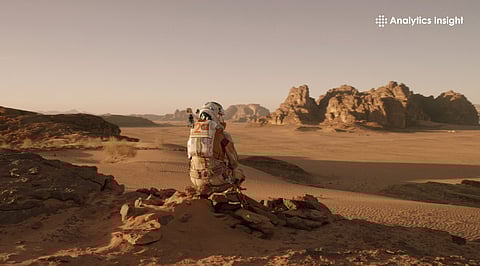
The Martian derives tension from persistence. The astronauts who stay back on Mars have to sustain their survival through three crucial skills: patience, problem-solving, and discipline. The movie sets its optimistic tone through scientific labor, which scientists conduct under demanding circumstances.
In Looper, time travel becomes a moral confrontation. Meeting one’s future self forces characters to face responsibility for the lives they shape. The film avoids flashy paradoxes, focusing instead on consequence and choice. Its power lies in showing that time may bend, but accountability does not.
Primer gives a sense that time travel is associated with dangerous and uncontrolled situations. The movie shows its complex story through characters who are affected by the unthinkable results of their time-travel actions. The movie does not provide any clear explanation, as it shows how intelligence and ambition result in unpredictable events.
Edge of Tomorrow uses a time loop that repeats itself endlessly. Testing the leads’ abilities through multiple resets enables them to learn from their mistakes, as they must continually improve at everything they do. The movie shows that actual development requires one to go through several failures before they can reach their goals.
The film Moon shows how people lose their identity when they are isolated. The film uses a small cast of characters and a limited setting to present moral dilemmas that the viewers can experience on a personal level. The movie shows how independence and personal identity are on the brink of collapse when people become interchangeable parts of a bigger organization.
Alien strips space of wonder and replaces it with fear. Exploration offers no promise here, only vulnerability. The film mixes science fiction with horror and presents survival as fragile and the unknown as hostile, reshaping how space itself is imagined on screen.
Also Read: Best Alien Movies to Watch in 2025 for Sci-Fi Fans
Across films like Interstellar, The Martian, and Moon, space is portrayed as an entity that creates distance. In Interstellar, time dilation turns separation into permanent loss, while Moon uses isolation to question identity and purpose. Even The Martian, despite its optimism, frames survival as a slow, exhausting process shaped by solitude and routine rather than adventure.
Time travel is also rarely shown as a means of solving issues. In Arrival, knowledge of the future brings suffering. In Looper and Primer, the consequences of altering time are also morally complex. Overall, these science fiction films use space and time to show the usual struggles of humans. Rather than providing an escape, these films encourage the audience to think about emotions, relationships, and decisions from a different perspective.
What makes a science fiction film memorable beyond special effects?
Films last when space and time serve emotional stakes, using spectacle to explore loss, choice, responsibility, and human relationships rather than technology alone.
Are these science fiction movies suitable for viewers new to the genre?
Yes. While some films are complex, most balance ideas with emotion, making them accessible even to viewers unfamiliar with space travel or time-loop narratives.
Do time travel films always focus on paradoxes and science rules?
Not always. Many prioritise character impact, using time travel to highlight regret, accountability, and moral dilemmas rather than strict scientific explanations.
Why do many space films portray isolation instead of adventure?
Space magnifies distance and risk. Filmmakers often use isolation to examine loneliness, resilience, and the psychological cost of exploration beyond Earth.
Where can these science fiction movies be streamed today?
Availability changes by region, but most titles rotate across platforms like Netflix, Prime Video, and other major streaming services, depending on licensing agreements.
