.png)

Explains ten major data labeling roles powering artificial intelligence across industries and applications worldwide today.
Clearly highlights essential responsibilities, required skills, and real-world use cases for every data labeling profession.
Shows why human expertise remains crucial despite rapid advancements in generative AI and automation technologies.
Even though AI may appear completely automated, there are people behind the curtain making computers smarter through their work on data. These data labelers assist in training AI through data classification, annotation, and assessment. This way, algorithms learn what certain patterns, languages, images, and responses mean for the system's future operation.
The rising popularity of artificial intelligence has changed the data labeling sector into various careers. Here is the list of 10 most popular data labeling jobs that have powered the AI revolution.
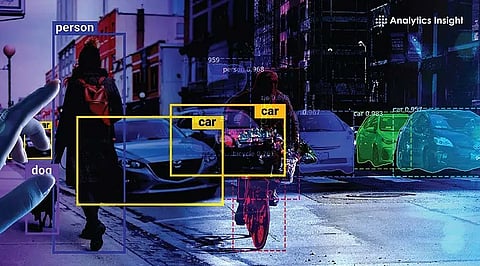
The task of image annotators is to label the objects within images. Objects are recognized using bounding boxes for cars, people, animals, and road signs, enabling the computer to identify them. Image annotation is very important in technologies such as facial recognition, medicine, and autonomous driving.
While image annotation deals with static images, video annotation deals with dynamic objects. The job of the video annotator is to assist the computer in understanding object motion. Video annotators are extremely important in technologies such as autonomous driving, surveillance cameras, and sports systems.
Text classification analysts deal with the task of categorizing text into pre-defined categories. For example, this means that the analyst should distinguish spam messages from other emails, classify customer reviews by subject, or categorize news articles by topic.
Sentiment analysis is now an essential part of many businesses' operations to understand their customers' sentiment. The process of sentiment analysis consists of reviewing the text and determining its sentiment as positive, negative, or neutral.
When building AI apps that use voice, you end up needing to process huge amounts of audio data, and a lot of that has to be tagged and annotated, kinda systematically. For the part where it’s transcribed, audio transcription specialists take spoken language and turn it into written text, but they’re not just listening for words. They also consider factors like who is talking, the accent, the mood or emotional tone, the pauses, and even the background noise that intrudes as everything unfolds.
With the emergence of generative AI, there emerged a need for AI response evaluators. AI response evaluators process chatbot-generated responses, analyze their quality, detect errors, and select the best response.
The role of content moderation review involves reviewing text, images, videos, and even comments to detect harmful content, offensive messages, or content that breaks the rules. Then, labels are attached to the content according to the platform’s guidelines, so the system can automatically detect what’s unacceptable.
Without proper quality control, there can be no annotation projects. The task of data quality reviewers is to assess completed annotations for accuracy and consistency.
As artificial intelligence technologies have become applicable across a variety of industries, companies have started hiring domain experts for their annotation expertise. Examples of such specialists are doctors, lawyers, engineers, financial analysts, and scientists.
Another fairly promising line of work seems to be emerging in the AI space. Basically, these folks are tasked with crafting prompts, then trying out the model’s replies, digging into the logic behind the results, and sending back useful feedback. That kind of feedback is really important because it helps move things forward and improves the accuracy of AI models overall.
Also Read: Top Data Science Programs Integrating AI, ML, Data Engineering, and Generative AI
While some entry-level labeling roles require minimal experience, many positions demand attention to detail, consistency, and strong analytical skills. Advanced roles often require expertise in specific industries or familiarity with AI workflows. Communication skills, critical thinking, and the ability to follow detailed guidelines are increasingly valuable as projects become more complex.
Also Read: Top 10 Data Science Skills Every AI Professional Needs
Most of the roles above are contract or full-time positions, and many ask for experience before you apply. The usual entry point is smaller: short, task-based work that lets you try annotation and AI training first, and learn how detailed guidelines work in practice.
Platforms such as JumpTask make that first step simple. JumpTask brings AI training tasks, micro tasks, app and website testing, and surveys into a single dashboard, so you can test several types of work and see which one suits you. Each task shows what it pays before you accept it, and credits are added to your balance once the work is verified.
Task types close to entry-level annotation: training AI, micro tasks, testing apps and websites, and surveys.
A fixed rate: earnings show as credits at a fixed rate of 1,000 credits = $1.00.
$0.50 minimum cashout: paid through GIFQ to gift cards, PayPal, or crypto in over 100 countries.
Free to join: the simplest tasks need no prior experience.
Most tasks pay between $0.01 and $50, so the total depends on which tasks are available and how much time you give them. Earnings vary and are not guaranteed. Task work of this kind is extra income rather than a replacement for a full data labeling role, but it is a practical way to build the habits that annotation employers look for: careful reading, consistency, and close attention to instructions
Artificial intelligence models require high-quality training data to be trained effectively. Human judgment by data labelers provides the machine learning algorithm with knowledge about objects, language structure, and the correct response to certain stimuli. All recommendation engines, assistants, chatbots, and other computer vision models are built upon this human foundation.
As artificial intelligence technology continues to develop, the work of data labelers becomes increasingly complex. Besides doing simple, repetitive tasks such as tagging data, data labelers are increasingly engaged in analyzing reasoning processes, checking and evaluating the results of machine learning models, and applying their own expertise.
Every time you get an accurate answer from your assistant or your self-driving car identifies pedestrians, there is a good chance that a team of data labelers worked to make this possible.
1. What is a data labeler?
A data labeler annotates images, text, audio, or videos to help train AI and machine learning models accurately.
2. What skills are required for data labeling jobs?
Attention to detail, analytical thinking, consistency, computer proficiency, and communication skills are essential for successful data labeling careers.
3. Which industries hire data labelers?
Technology, healthcare, automotive, finance, retail, cybersecurity, and e-commerce companies regularly hire data labeling professionals for AI development.
4. Is data labeling a good career in 2026?
Yes, growing AI adoption has increased demand for skilled data labelers, especially domain experts and AI response evaluators worldwide.
5. What is the difference between data labeling and data annotation?
Data annotation broadly adds information to datasets, while data labeling specifically assigns tags or categories for AI model training.
