.png)

SpaceX is working to make space technology more commercially practical through reusable rockets, satellite communications, and next-generation spacecraft.
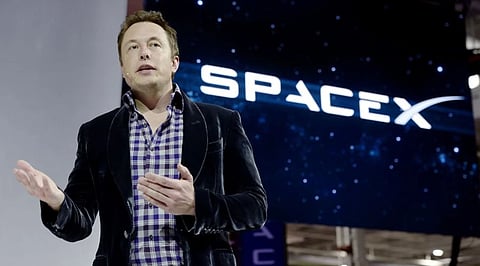
Under Elon Musk's leadership, the company has developed a business model that connects rocket launches with Starlink, its satellite broadband service, creating demand for both launch capacity and orbital infrastructure.
Starship represents the next major step. Its September 2026 orbital test deployed 26 Starlink satellites, though an engine issue shortened the mission.
Space technology was once dominated by government agencies, long development cycles, and missions that could cost billions of dollars. Elon Musk wants to change that equation. Through SpaceX, he is building rockets, spacecraft, and satellite networks designed to make access to space more frequent and commercially viable.
The company's approach goes beyond launching satellites. Reusable rockets, Starlink's broadband network, and the development of Starship are part of a broader strategy to turn space infrastructure into a scalable business. The progress is significant, but the technology still faces engineering, financial, and regulatory challenges.
One of SpaceX's biggest contributions has been making rocket reuse a practical part of regular space operations. Its Falcon 9 rocket can return to Earth after launch, allowing the company to refurbish and fly boosters again instead of building a new one for every mission.
This approach helps reduce hardware costs and supports a higher launch frequency. It has also allowed SpaceX to serve commercial satellite operators, government customers, and NASA missions while deploying its own Starlink satellites.
Reusability does not make launches inexpensive overnight. Recovery, inspections, refurbishment, and testing still cost money. However, repeated flights give engineers opportunities to improve reliability and make launch operations more routine. SpaceX's reusability program remains central to its long-term strategy.
Also Read: Meta, SpaceX Among Trump’s Biggest Investments in New Financial Disclosure
SpaceX's Starship and Super Heavy system is designed to carry crew and cargo to Earth orbit, the Moon, and eventually Mars. Its fully reusable design aims to move much larger payloads than the company's existing launch vehicles.
Starship reached orbit for the first time during its September 28, 2026, flight test and deployed 26 next-generation Starlink satellites. The mission marked an important milestone, though an engine issue shortened the flight, and the vehicle still needs further development.
The next challenge is proving that Starship can be reused reliably, refuel in space, and support demanding missions. Those capabilities are essential to SpaceX's plans for larger satellite deployments and future lunar exploration.
Starlink demonstrates how launch technology can support a recurring commercial service. Instead of depending only on customers buying rocket launches, SpaceX operates a satellite network that sells broadband connectivity to households, businesses, and other users.
Frequent launches help the company expand and upgrade that network. Its growing satellite fleet also creates demand for more launch capacity, linking its rocket and connectivity businesses.
SpaceX is pushing further into mobile connectivity. In October, it agreed to acquire a nationwide 800 MHz spectrum portfolio for about $8 billion, aiming to strengthen Starlink Mobile's direct-to-device ambitions. The transaction remains subject to regulatory approval, and building a competitive mobile service will require more than acquiring spectrum. Reuters reported on the deal.
Also Read: SpaceX Seeks USD 40 Billion to Fund Massive Nvidia Chip Purchase
SpaceX is also exploring whether satellites could host computing infrastructure for artificial intelligence. The idea is to place computing hardware in orbit and use the company's launch capabilities to deploy it.
Elon Musk has indicated that initial AI satellites could launch in late 2027, with deployment expanding afterward. This remains a plan rather than an established commercial service. Bloomberg reported on the proposed timeline.
The concept faces difficult questions, including how to supply power, remove heat, maintain hardware, and move large volumes of data. Orbital computing could eventually serve specialized needs, but its commercial economics have yet to be demonstrated.
SpaceX's approach combines manufacturing, launch operations, satellite deployment, and connectivity services within one business. That integration can give the company greater control over costs and development schedules.
However, the strategy requires enormous investment. Starship must become more reliable, satellite networks need ongoing upgrades, and new services must attract enough customers to justify their expense. Competition, regulatory restrictions, and the risk of launch failures remain significant challenges.
Musk's larger ambition is to make space access more routine and open the door to commercial activity beyond Earth. SpaceX has already shown that reusable rockets and satellite broadband can support businesses operating at considerable scale.
Whether Starship, mobile connectivity, and orbital AI achieve similar success will depend on execution rather than ambition alone. For now, SpaceX's progress shows how launch technology is evolving from an expensive gateway to space into infrastructure for a wider commercial ecosystem.
Elon Musk is an entrepreneur who leads SpaceX, a company developing launch vehicles, spacecraft, and satellite communications systems. Under his leadership, SpaceX has pursued reusable rockets, Starlink broadband, and Starship, with the broader aim of making space access more frequent and expanding commercial activity beyond Earth.
SpaceX has helped make reusable rockets a regular part of commercial launch operations. By recovering and reusing Falcon 9 boosters, the company can reduce the need to build new hardware for every launch. Its combination of launch services and Starlink also links space transportation with a recurring satellite connectivity business.
Falcon 9 is SpaceX's partially reusable orbital launch vehicle. Its first-stage booster can return to Earth for refurbishment and reuse. Reusability can reduce hardware costs and support more frequent launches, although recovery, inspection, refurbishment, and testing still require time and money. Its long-term value depends on reliability and operational efficiency.
Starship, paired with its Super Heavy booster, is being developed to carry people and cargo to Earth orbit and support future missions to the Moon and Mars. Its design aims for full reusability and larger payload capacity than SpaceX's existing launch vehicles. The system still requires further testing before all its intended capabilities can be demonstrated.
Starlink provides satellite broadband services to households, businesses, and other customers. Unlike one-time launch contracts, connectivity subscriptions can generate recurring revenue. SpaceX also uses its launch capability to deploy and upgrade Starlink satellites, linking its launch operations with the growth of its communications network.
