.png)

CTOs diversify suppliers and manufacturing locations to reduce dependence on a limited number of semiconductor sources.
Custom silicon, chiplets, and RISC-V offer greater control over hardware design and processor choices.
Software optimization and strategic inventory help companies manage chip shortages and protect product development.
A shortage of semiconductors can push back product launches, drive up technology costs and disrupt whole industries. One missing chip is enough to stall a carmaker, a cloud service provider or an electronics company.
For Chief Technology Officers (CTOs), the risk now reaches far beyond buying hardware. It touches product design, supplier choice, research and long-term business plans. As global demand for advanced chips climbs, technology leaders are looking for ways to depend less on a handful of manufacturers and to build supply networks that can bend without breaking.
The global semiconductor industry leans on a small number of companies for advanced chip production, memory, and packaging. That concentration creates supply risk whenever trade rules shift, political tensions rise or demand outruns factory capacity.
A September 2026 analysis from the Center for Strategic and International Studies (CSIS) warned that the global memory shortage could last through 2027 and possibly into 2028. It also cited forecasts that memory makers may meet only about 60% of global demand in 2026.
Artificial intelligence has added to the strain. Data centers need powerful processors, high-bandwidth memory (HBM) and advanced packaging to run large AI workloads. Meanwhile, automakers and industrial firms still depend on mature-node chips for vehicles, machines and control systems.
A Reuters report from November 10, 2026, raised concerns about shortages of these traditional components as chipmakers move resources toward AI products. CTOs now have to shield both advanced computing projects and everyday product lines from supply delays.
One of the main responses is to stop relying on a single chip supplier or manufacturing region. CTOs now look for multiple qualified sources for processors, memory, power-management chips and other critical parts. They also work with suppliers in different countries, so a disruption in one place does not halt everything.
A 2026 KPMG semiconductor outlook, based on a survey of 151 industry executives, found that 54% saw geographic diversification as a key action, and another 45% named supply-chain flexibility as a strategic priority. Numbers like these show why supplier choice has become part of technology planning. Long-term supply contracts and planned inventory reserves also help companies protect key products when demand spikes or deliveries slip.
Also Read - Top 10 Photonics Companies Leading Innovation in 2026
Large technology companies are also pursuing control through custom silicon. Google has built Tensor Processing Units (TPUs) for AI workloads, and Amazon offers Trainium and Inferentia chips for AI training and inference. Microsoft has introduced Maia AI accelerators and Cobalt CPUs, while Meta has developed its Meta Training and Inference Accelerator (MTIA).
A custom chip lets a company shape hardware around its own software and computing needs. This can boost performance and cut reliance on general-purpose processors for certain jobs. Custom design does not, however, remove the need for outside foundries, memory makers, packaging firms or chip equipment suppliers. CTOs should treat custom silicon as one piece of a wider supply strategy rather than a complete answer.
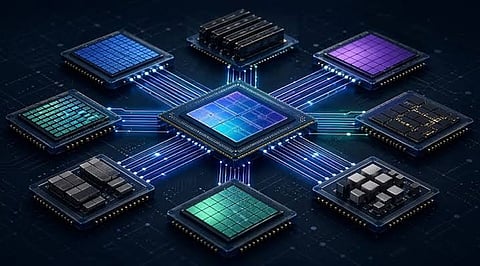
Chiplet technology gives hardware teams another way to manage supply risk. Instead of putting every function on one large silicon die, engineers split a processor into smaller parts. A design can then mix components from different process nodes and suppliers. The approach can improve production yields and widen the choice of chip parts.
The open RISC-V architecture is drawing interest too. It lets companies build custom processors without depending on a proprietary instruction-set license, which gives hardware teams more control over product design, especially in embedded systems and industrial devices. Even so, companies need to weigh cost, software support, security and the supplier base before adopting a new architecture.
Not every shortage has to be solved with new hardware. Better software can squeeze more value out of the chips a company already has. Model quantization, pruning, compiler improvements and efficient AI inference can all reduce the need for high-end processors. Better server utilization also lets data centers handle more work on the same hardware.
This matters most for firms that cannot get enough GPUs or advanced accelerators. A well-optimized workload can run on a wider range of processors, which leaves the company with more options when a supplier runs late. Software teams therefore have a direct part to play in managing semiconductor risk.
India has stepped up its push to build local semiconductor capacity. On July 15, 2026, the Union Cabinet approved Semicon 2.0 with an outlay of Rs. 1,27,500 crore. The program spans chip design, manufacturing equipment, materials, fabrication, packaging, testing, research, and talent development.
At SEMICON India 2026, the government pointed to commercial DRAM and NAND production at Micron’s Sanand site in Gujarat. Tata Electronics also reported progress on its Dholera fabrication project and its Jagiroad OSAT facility. On November 6, 2026, India opened the Semicon 2.0 application portal for equipment, materials, fab and packaging projects. These steps give companies new options for widening their supplier base, though India still needs more capacity and expertise across the full semiconductor chain.
Why this Matters
Semiconductor dependency can hit product costs, delivery schedules, business growth, and access to critical technology. A shortage of key chips can hold up entire projects and weaken a company’s ability to compete. For CTOs, a dependable chip supply is essential for protecting product development, controlling costs, lowering business risk and keeping long-term technology independence.
Semiconductor supply risk now shapes how technology companies plan their products. Supplier diversity, custom chips, chiplets, open architectures, software efficiency and strategic inventory all help limit exposure. No single measure removes the risk, particularly while advanced manufacturing stays concentrated among a few global players.
The strongest response begins at the design stage. CTOs who check chip availability before a product enters development can pick alternative parts, qualify more suppliers, and avoid expensive redesigns later. Semiconductor resilience is no longer just a procurement issue. It is a core part of technology strategy and a deciding factor in whether a company delivers its products on time.
1. Why is semiconductor dependency a concern for technology companies?
Heavy reliance on a few chip suppliers can cause production delays, higher costs, and disruptions to product development.
2. How can CTOs reduce semiconductor dependency?
CTOs can diversify suppliers, secure long-term supply agreements, maintain strategic inventory, and explore alternative chip designs.
3. What role does custom silicon play in reducing dependency?
Custom silicon allows companies to develop processors for specific workloads and gain more control over hardware performance and design.
4. How can chiplet technology help technology companies?
Chiplets divide a processor into smaller components, which gives engineers more flexibility in chip design and component selection.
5. How is India addressing semiconductor dependency?
India's Semicon 2.0 program supports chip design, fabrication, equipment, materials, packaging, testing, research, and talent development.