.png)

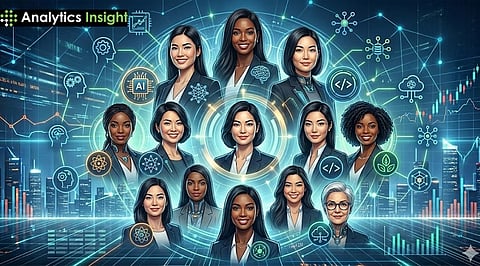
Women CEOs are leading AI, cloud, and fintech transformation across global technology ecosystems today.
Indian and global leaders are shaping scalable platforms, driving innovation and digital infrastructure growth worldwide.
Their leadership defines how technology evolves, expands access, and impacts businesses and users globally.
Technology leadership is entering a new era increasingly shaped by women. Female CEOs are now driving the decisions that define today's technology landscape: from cloud infrastructure and fintech platforms to the consumer applications woven into daily life. Their leadership extends beyond performance metrics; it encompasses how technologies scale, who gets access to them, and ultimately, how the future of the industry takes shape.
These women are creating the future of technology by leading innovations in AI, technology platforms, and technology infrastructure.
Lisa Su has transformed Advanced Micro Devices (AMD) into a central player in high-performance computing. Her focus on advanced chips and data centre solutions has placed AMD in direct competition with industry leaders. As demand for AI accelerates, her strategy influences the computing power that underpins global digital infrastructure.
Oracle’s Safra Catz sees her firm as a reliable foundation for enterprise computing. Her strategy relies on large-scale and long-term engagements that facilitate vital AI operations. Instead of seeking quick recognition, she ensures the development of устойчив and embedded technological infrastructure across business and governmental sectors.
Zoox’s Aicha Evans aims to bring autonomous transportation systems into everyday life. As an Amazon-backed venture, it combines AI technology, robotics, and urban mobility solutions. The mission is focused on addressing practical implementation challenges, including safety, regulatory compliance, and scalability.
Through Melanie Perkins’ efforts, Canva has developed into a widely used tool for creating digital content. As a result of her strong inclination towards technology involving artificial intelligence, she makes it easy and convenient to create designs. This product is an example of the increasing trend of making advanced technologies available and easy to use by non-experts.
With the continuous development of Whitney Wolfe Herd’s Bumble, artificial intelligence can be found incorporated in the key components. Technology plays an important role in influencing the behavior of people within platforms.
Julia Hartz, Co-founder & Chief Strategy Officer of Eventbrite, is trying to rebuild the world of events via data analytics. She believes that the key to achieving her goal is by ensuring that creators get the ability to engage with their audiences more effectively. The platform serves as a link between consumers’ online and offline experiences.
Nanxi Liu, Co-Founder and CEO of Blaze.tech, is fast-tracking software development through no-code technology. Using the combination of artificial intelligence and no-code technology, Nanxi helps organizations create digital products without requiring massive engineering teams.
This era of relevance globally is being steered by Roshni Nadar Malhotra in her role at HCLTech, where she is focused on cloud and AI services, which will help in transforming enterprises for global players. India is becoming an important player in global technology infrastructure as well.
At Mad Street Den, Ashwini Asokan is using AI applications in business settings. The use of computer vision at Mad Street Den helps in making decisions related to retail operations as well as engaging customers. In recent times, a trend of using AI technology in real-life scenarios is developing.
Upasana Taku has increased the presence of MobiKwik in the country’s digital landscape. It focuses on payment options and credit access to provide financial assistance to people. With the integration of technology in their day-to-day lives, consumers make financial decisions.
Also Read: Air India CEO Campbell Wilson to Step Down Amid Ongoing Turnaround
Artificial intelligence emerges as the common thread across sectors. Infrastructure, platforms, and applications all rely on AI-driven capabilities. Founder-led companies dominate newer segments, while established firms adapt to cloud-based models. Indian leaders stand out in applied innovation, particularly in fintech and enterprise technology, signaling a transition toward globally competitive product development.
Also Read: Ripple CEO Points to $13T Stablecoin Opportunity as Retail Concerns Grow
The emergence of women CEOs is indicative of a larger shift in power dynamics within the technology sector. The new players wielding this power include individuals who govern platforms, information, and AI. They will play an important role in determining how technology becomes embedded in our daily lives.
1. Why are women CEOs gaining visibility in technology?
Women CEOs are gaining visibility as they lead high-growth sectors like AI, fintech, and SaaS, driving innovation and global expansion strategies.
2. Which sectors see the most women tech leaders?
Artificial intelligence, fintech, enterprise software, and consumer platforms see the highest number of women leaders, reflecting growth in scalable, digital-first businesses.
3. How are Indian women CEOs influencing global tech?
Indian women CEOs are building globally competitive products in AI, fintech, and SaaS, shifting perception from service providers to innovation leaders.
4. What leadership trends define these CEOs?
These CEOs prioritize AI integration, platform-based growth, user-centric design, and long-term scalability, aligning technology development with real-world applications and market needs.
5. Why does representation in tech leadership matter?
Greater representation in tech leadership ensures diverse perspectives, better decision-making, inclusive product design, and broader access to technology across different user groups.
