.png)

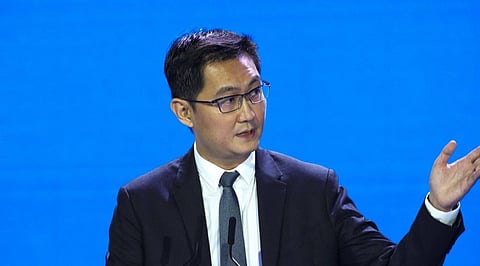
Pony Ma is integrating Tencent's AI models across consumer, enterprise, gaming, and cloud services.
Hunyuan Hy3 is strengthening Tencent's push into reasoning, coding, and AI agents.
Weixin, Tencent Cloud, and other platforms could accelerate AI adoption across China's digital economy.
Tencent is pushing artificial intelligence deeper into its digital ecosystem. The strategy reaches far beyond standalone chatbots. Pony Ma, Tencent's Chairman and CEO, is overseeing this broader technology shift. The company is combining models, cloud infrastructure, agents, and existing platforms.
This approach gives Tencent an important distribution advantage in China. Its ecosystem already connects consumers, businesses, developers, and advertisers. Now, Tencent's AI strategy includes Hunyuan, Yuanbao, WorkBuddy, and Weixin.
Tencent's Hunyuan model family sits at the center of its AI strategy. The company has connected Hunyuan with numerous internal products. In July 2026, Tencent officially launched the Hy3 model. It uses a mixture-of-experts architecture with 295 billion parameters. Hy3 supports a context length of up to 256,000 tokens.
According to Tencent, it offers stronger performance with greater cost efficiency. The model is already used across several Tencent products. These include Yuanbao, WorkBuddy, CodeBuddy, Marvis, and ima. Hy3 also supports applications across Weixin and gaming. Tencent has released it under the commercially friendly Apache 2.0 license. This gives developers another entry point into Tencent's growing AI ecosystem.
Also Read: US-China AI Race Gets Serious: Countries May Soon Have to Choose
Tencent has a major advantage in Weixin's enormous user base. The platform had around 1.4 billion combined users by mid-2026. Tencent is integrating AI into existing Weixin experiences. These include content discovery, search, recommendations, and customer service.
The company is also developing AI agents for Weixin. These agents could eventually perform tasks across Mini Programs. This could change how users interact with digital services. Instead of opening separate apps, users could delegate tasks through agents.
This creates an important commercial opportunity for Tencent. AI could increase activity across payments, commerce, advertising, and services. The strategy also gives developers a large distribution channel. New AI capabilities can reach users through familiar Tencent platforms.
Yuanbao is Tencent's consumer-facing AI assistant, which provides another route for the company to build daily AI usage. Tencent is also developing productivity-focused AI products. WorkBuddy targets workplace productivity, while CodeBuddy focuses on software development.
These products extend Tencent's AI ambitions beyond consumer entertainment. They also create opportunities for recurring enterprise usage. WorkBuddy has gained significant traction in China's productivity AI market. Tencent said it ranked first by monthly interactions among productivity AI services in China.
The broader strategy is straightforward. Tencent wants AI to become useful across everyday digital tasks. This could strengthen its existing ecosystem while creating new revenue opportunities.
AI applications require significant computing infrastructure. Tencent is therefore increasing investment in cloud and computing capacity. Tencent Cloud provides infrastructure for businesses using AI services. It also supports the company's own growing model and application portfolio.
The company substantially increased computing procurement during 2026. Capital expenditure reached 52.8 billion yuan during the second quarter. This spending reflects the scale of Tencent's AI ambitions. It also shows the costs involved before large-scale AI monetization arrives.
Tencent expects AI usage to eventually generate stronger returns. Management has compared the strategy with its earlier long-term cloud investment.
Tencent is not treating AI as a separate business. The company is applying it across existing operations. Advertising is one important example. AI can improve targeting, recommendations, and campaign performance.
Tencent's marketing services revenue rose 22% year over year. AI-driven improvements contributed to stronger advertising performance in the second quarter. Gaming is another major area for experimentation. AI assistants can support players and provide more responsive experiences.
Tencent is also applying AI across customer service and content discovery. These applications can improve existing products without requiring entirely new platforms. This approach could make AI investment more commercially sustainable.
Tencent's AI strategy increasingly centers on ecosystem integration. The company is not relying on one chatbot or model. Instead, it is connecting models with applications, cloud infrastructure, and distribution. This creates multiple routes for AI adoption and monetization.
The strategy also requires substantial upfront investment. Tencent's AI spending is rising rapidly as it builds computing capacity. The challenge will be turning that investment into sustainable returns. Competition across China's AI market is also intensifying.
Still, Tencent has an unusual advantage. Its consumer platforms already reach hundreds of millions of users. If Tencent successfully embeds AI into those platforms, adoption could happen quickly. Pony Ma's strategy is therefore less about launching one breakthrough product. It is about making AI a deeper layer of China's digital economy.
Pony Ma, also known as Ma Huateng, is the Chairman and CEO of Tencent. He co-founded the company and has led its expansion across social media, gaming, payments, cloud computing, and digital services. Under his leadership, Tencent is now increasing its focus on artificial intelligence.
Tencent is integrating AI across its existing digital ecosystem. Its strategy includes foundation models, AI assistants, agents, cloud infrastructure, gaming, advertising, and productivity tools. Rather than relying on one consumer chatbot, Tencent is connecting AI capabilities across multiple products and business areas.
Hy3 is Tencent's latest Hunyuan model. It uses a Mixture-of-Experts architecture with 295 billion total parameters and 21 billion active parameters. It supports a context window of up to 256K tokens. Tencent designed it for reasoning, coding, long-context tasks, and agent workflows.
Weixin gives Tencent a powerful distribution channel for AI services. AI could improve search, recommendations, customer service, and other experiences. Tencent is also exploring agent-based interactions. These could allow users to complete tasks across services without manually opening multiple applications.
Yuanbao is Tencent's consumer-facing AI assistant. It provides users with access to Tencent's AI capabilities and serves as an important consumer application for its Hunyuan models. Yuanbao also provides real-world feedback that can help Tencent improve its AI products.
