.png)

Every large bank now runs anti-money-laundering and fraud-detection models that score millions of transactions a day. The marketing tells one story — detection rates climbing, false positives falling, model architectures getting smarter. Inside the engineering organizations that ship and operate these systems, a different story is being told: the models work on the day they were built. What happens on day 200 is a harder question that most banks answer poorly.
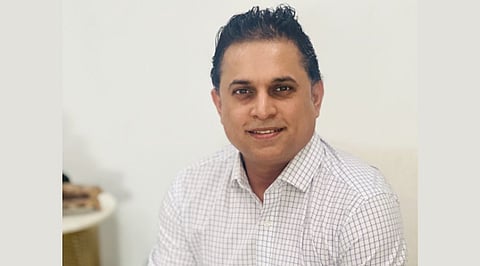
Few people have answered that harder question as convincingly as Manu Subhashchandrabose. A Director – Digital and AI Quality Engineering whose fraud- and AML-validation programs have set new benchmarks across the U.S. regional-banking sector, he has led the quality engineering behind a $200M+ multi-year core-banking transformation spanning six affiliate banks — a program that went live with zero critical fraud-related defects and achieved 100 percent reconciliation accuracy on the data that fraud models depend on. It is the kind of outcome most banks aspire to and few achieve, and it has made his name synonymous with a simple, hard-won idea: a model is only as trustworthy as the validation discipline standing behind it. It is work whose significance reaches well beyond any single bank: by strengthening the fraud and anti-money-laundering defenses that U.S. regional banks rely on, Manu is helping protect the integrity of the American financial system and the millions of customers who depend on it.
That reputation has been built program after program. Under his leadership, quality organizations of up to 55 engineers across 10 teams have lifted automation coverage to 85 to 90 percent across AML, currency-transaction-report, sanctions-screening, and high-risk transaction monitoring; cut false positives by 15 to 20 percent; accelerated AML rule deployment by 30 to 40 percent; and reduced fraud-related production defects by 35 to 50 percent. None of it came from tuning thresholds. All of it came from rebuilding the validation discipline underneath the models — and that distinction is the heart of the argument he has spent a decade making.
Manu puts it bluntly: “Accuracy is not the real problem. Validation is.”
The distinction is small in words and large in consequence. A bank that confuses the two will fund a model team, ship a model, watch the dashboards report 98 percent accuracy, and discover only after a regulatory examination that the 2 percent it missed was the 2 percent that mattered. The blind spot at the center of modern fraud detection, in his telling, is not in the model. It is in everything around it.
Fraud models are trained on yesterday’s behavior. Customers, criminals, upstream data feeds, rule libraries, and integration layers all shift continuously. The model does not. In the time it takes a quarterly compliance committee to meet, a behavioral fraud model can lose meaningful detection signal without producing a single visible alert that anything is wrong.
“Fraud models inherit the weaknesses of the systems around them,” Manu says. “If data pipelines, ETL jobs, or integration layers are flawed, even the most accurate model becomes blind.”
That observation came out of one of the harder problems his teams had to solve. AML and fraud-detection models at a multi-bank holding company were producing inconsistent results across affiliate banks. The model logic was the same. The accuracy on test data was the same. Production behavior was not. The investigation pointed at upstream data: missing fields, undocumented transformations, ETL jobs that had quietly changed shape over years.
His response set the template for what colleagues now regard as his hallmark. His team built a data-lineage validation framework on top of the existing pipelines, tracing every fraud-critical field from origin to model input, with reconciliation at each hop and threshold tests on the values. The program achieved 100 percent reconciliation accuracy on fraud-critical data, and model behavior stopped diverging across the affiliate banks.
Most banks treat their AML false-positive rate as a tuning problem. The model fires too often, an analyst tweaks a threshold, the queue gets shorter. Manu argues that approach is exactly backwards.
“Rules are outdated, undocumented, and inconsistent across systems,” he says of the legacy AML environments he has spent years validating. “You can tune a threshold all day and never fix the fact that the underlying scenario library is missing cross-channel patterns, structured transactions, and country-specific triggers that should have been firing in the first place.”
His teams designed scenario-based testing for structured transactions, currency-transaction-report triggers, sanctions screening, and behavioral anomalies, validating each scenario through API simulations rather than end-user transactions. In one AML modernization program built on a major commercial monitoring platform, the approach produced a 40 percent increase in scenario coverage and a 15 to 20 percent reduction in false positives. The false-positive rate fell because the scenario library got correct, not because someone moved a threshold.
The riskiest moment in the life of a fraud model is when its inputs move. Cloud migration of core banking systems means shifting customer profiles, transaction histories, AML flags, and behavioral features from on-premise stores into cloud-native pipelines, often with new transformations layered in. A single mis-mapped field can corrupt a feature, and a corrupted feature can degrade a model in ways that look like normal variation in alert volume.
Manu led the data-migration validation for one such cloud transformation. “Even minor data mismatches could cause model drift or regulatory violations,” he says. His teams built SQL-driven reconciliation across source and target, automated validation scripts on every batch, and data-quality dashboards that surfaced anomalies before the model team did. The program achieved 100 percent reconciliation accuracy on fraud-critical data and prevented post-migration degradation an accuracy-only regime would have missed.
The technical scaffolding is only half the story. The other half is governance. A serious validation program has to coordinate QA, data engineering, risk, model owners, compliance, and the business lines that use the alerts. On the multi-year core banking transformation that anchored much of his recent work, his QA organization grew to 55 engineers across 10 teams.
The governance model he put in place treated validation as continuous, not periodic. Quality gates were embedded in the build pipeline. CI/CD integration accelerated AML rule deployment by 30 to 40 percent, because rule changes were validated against a living scenario library on the way in rather than against a quarterly batch run. Centralized scenario reporting gave executives a single view of detection coverage, model behavior, and open validation defects. Across six affiliate banks, the program went live with zero critical fraud-related defects.
“Models degrade over time,” Manu says. “Validation must evolve with customer behavior, transaction patterns, and emerging fraud vectors. Treat the model as a living system, not a static algorithm.”
The supervisory environment has moved in his direction. CCAR submissions are increasingly probed for model-validation evidence rather than accuracy summaries. Anti-Money Laundering Act amendments and OCC guidance have raised the bar on explainability, traceability, and ongoing validation. Examiners want to see how a model’s inputs are reconciled, how its scenarios are tested, and how its behavior is monitored between formal model-risk-management reviews.
“Regulators are raising the bar,” Manu says. “They are asking for explainability, traceability, and validation, not just accuracy metrics. The teams that can produce that evidence on demand are the ones that built it into the system, not the ones that try to assemble it after the request arrives.”
His own programs reported a 35 to 50 percent reduction in fraud-related production defects and 85 to 90 percent automation coverage across AML, CTR, sanctions screening, and high-risk transaction monitoring. The number that matters most to him is the absence of a category. Across the modernization programs, no fraud-related production defect required executive escalation at go-live. That is not a tuning outcome. It is a validation outcome.
The mistake Manu wants banking-technology leaders to stop making is treating a high accuracy score as a license to relax. “A model with 98 percent accuracy can still miss the 2 percent of transactions that cause millions in fraud losses,” he says. “Accuracy is a snapshot. Validation is a discipline.”
The practical implications follow. Hire validation engineers alongside data scientists. Treat the ETL jobs that feed a model as part of the model’s surface area. Write scenario tests against regulatory expectations, not only against labeled datasets. Move validation left, into requirements and design, rather than treating it as a release-readiness checkbox.
For an industry that has spent a decade pouring money into model sophistication, the shift is not glamorous. It is plumbing, governance, and discipline. The banks that build it — the way Manu has built it, program after program — are the ones whose fraud stacks still work the day after the data shifts, the rule library changes, or the next examiner walks in. The banks that do not will keep reporting impressive accuracy on models that have quietly stopped catching the fraud that matters.
About Manu Subhashchandrabose
Director – Digital and AI Quality Engineering
MIT Trained AI Professional
Manu brings more than 18 years leading quality-engineering organizations of 55-plus across Fortune 500 banking and enterprise programs. He has directed QA and validation for a $200M+ multi-year core-banking transformation spanning six regional banks and 70-plus system integrations, with deep specialization in AML and financial-crime monitoring on platforms including NICE Actimize, TCS BaNCS, FiServ DNA, and nCino.
A published IEEE author — “Secure Authentication using Image Processing and Visual Cryptography for Banking Applications” (ADCOM 2008) — his research spans banking authentication, fraud and AML detection methodology, and AI-led quality engineering, including an AI-powered Fraud & AML Investigation Advisor aligned to the BSA / USA PATRIOT Act, OFAC, FinCEN SAR, and SR 11-7 model-risk governance. He is an AWS Certified Solutions Architect and holds a Master’s degree in Computer Applications.
