.png)

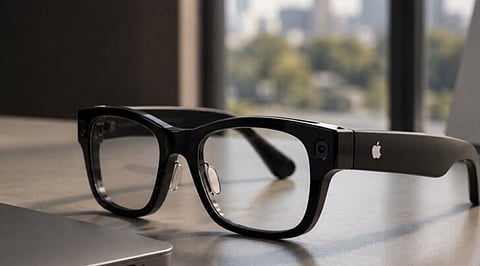
Apple reportedly plans smart glasses for 2027, centred around Siri and AI.
Cameras may help Apple Intelligence understand surroundings and interpret visual information.
Privacy concerns could shape Apple’s approach to cameras, recording and AI.
Apple is reportedly preparing to enter the smart glasses market in 2027 with its first AI-powered wearable. The glasses are expected to focus on artificial intelligence rather than augmented reality, with Siri, cameras, microphones, and speakers forming the core of the experience.
Apple is currently planning to unveil the device at WWDC in June 2027, with shipments expected to begin later in the year. The company had previously been considering an earlier launch, but privacy concerns and product development have reportedly pushed the timeline back.
Unlike Apple’s Vision Pro, the first-generation smart glasses are not expected to feature an integrated display. Instead, the device is reportedly being developed as an AI-powered wearable that can understand the user’s surroundings and respond through built-in speakers.
The glasses are expected to include cameras, microphones and speakers, with the iPhone playing an important role in the overall experience. Apple is reportedly testing different frame designs, materials and colors as it develops the product.
The first version is therefore expected to be closer to an AI assistant worn on the face than a traditional augmented-reality device. Apple’s longer-term plans for display-equipped AR glasses are expected to remain separate from this first product.
Siri is expected to be one of the most important parts of Apple’s smart glasses strategy. The cameras could allow Siri and Apple Intelligence to understand what the wearer is looking at and provide information through audio.
Possible uses include identifying objects and surroundings, reading or translating signs, providing directions, answering questions about what the camera sees, delivering notifications, making calls, and playing music.
Apple has already introduced a substantially upgraded Siri AI powered by Apple Intelligence. The new Siri is designed to understand personal context, interact with information across apps, and use visual intelligence to answer questions about what users see. Apple says its new architecture uses both on-device processing and Private Cloud Compute for more complex requests.
That technology could provide the foundation for the assistant on Apple’s future glasses.
The camera is also one of the biggest uncertainties surrounding Apple’s smart glasses.
Reports have indicated that Apple is testing a two-camera setup. One camera could capture higher-resolution photos and video, while another, lower-resolution wide-angle camera could help interpret hand gestures and provide visual information to Siri.
However, Apple has reportedly not made a final decision on how camera recording will work. One possibility being considered is using cameras to provide visual information to AI without allowing them to record conventional photos or videos. Privacy concerns are a major reason behind the company’s caution.
Also Read: Apple Smart Glasses vs Meta Ray-Ban vs Vision Pro: Which Should You Buy
Privacy could become one of Apple’s biggest selling points, and challenges, in the smart glasses market.
Camera-equipped glasses have already faced criticism for the possibility that people may be recorded without their knowledge or consent. Apple is reportedly studying how competitors, including Meta’s Ray-Ban smart glasses, have dealt with these concerns.
The company is expected to emphasize privacy-friendly features, including on-device processing and safeguards around recordings. Reports have also suggested that Apple is unlikely to use customer recordings to train its AI models and could avoid facial recognition.
Apple’s own Apple Intelligence architecture already places strong emphasis on privacy. The company says that data processed through Private Cloud Compute is neither stored nor made accessible to Apple or other parties.
Also Read: Apple Maps Gets Public Transport Support in India: What’s Available?
The first Apple smart glasses are not expected to offer the full augmented-reality experience associated with the Vision Pro. Without an in-lens display, information would be delivered primarily through audio and Siri interactions.
That makes the 2027 device a different proposition from the AR glasses Apple is expected to pursue in the longer term.
For now, Apple’s reported strategy is clear: combine cameras, Siri, Apple Intelligence, and iPhone integration in a lightweight wearable, while making privacy a central part of the product.
Apple has not officially confirmed the launch date, specifications, or final feature set. The reported WWDC 2027 unveiling and late-2027 availability remain subject to change as development continues.
When will Apple smart glasses launch?
Apple is reportedly targeting 2027, with a possible WWDC unveiling and release later that year.
Will Apple smart glasses have a display?
The first-generation Apple smart glasses are not expected to feature an integrated display or full augmented reality.
How will Siri work on Apple smart glasses?
Siri could use cameras, microphones and Apple Intelligence to understand surroundings and answer users through built-in speakers.
Will Apple smart glasses record photos and videos?
Apple is reportedly considering cameras for AI without allowing conventional photo or video recording, amid privacy concerns.
What privacy features could Apple smart glasses offer?
Apple is reportedly developing privacy safeguards, including protections around recordings, AI processing and potential restrictions on facial recognition.
