.png)

eSIM wins on convenience: Ideal for travelers, multiple numbers, and digital activation.
Physical SIM wins on flexibility: Easy to move between compatible phones, especially during emergencies.
Dual-SIM is the best of both: Combines eSIM convenience with physical SIM backup.
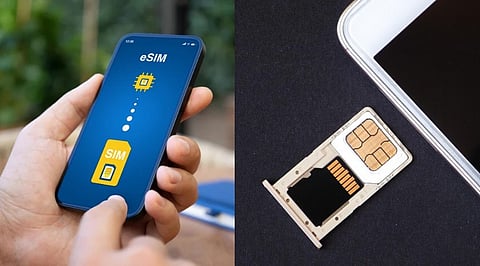
A smartphone no longer needs a small plastic card for mobile service. An eSIM can store a mobile plan inside the phone, while a physical SIM keeps the familiar removable card. Both options offer calls, messages, mobile data and 5G access. The real difference comes from travel, phone changes, security, carrier support and recovery after a device failure.
For most modern flagship phones, eSIM offers the more flexible choice. A physical SIM still has a clear advantage for quick phone changes and wider device compatibility. A phone with support for both options offers the strongest mix of convenience and backup.
Travel stands out as one of the biggest advantages of an eSIM. A travel data plan can be added to a phone without a trip to a local store for a plastic SIM card. A plan can often start before a flight or soon after arrival, which makes mobile access much simpler in another country.
Apple states that international eSIM providers offer plans across more than 190 countries and regions. Modern smartphones can also hold several eSIM profiles. That setup can keep a main number available while a second plan handles travel data. For frequent international trips, eSIM offers a clear advantage.
Multiple numbers also work well with eSIM. A personal number can stay on one line while a work number or travel plan uses another. A compatible phone can manage both lines without the need for two physical cards.
Security gives eSIM another useful edge. A thief cannot simply pull an eSIM from a stolen phone and place the card in another device. That extra barrier can help preserve cellular access for device recovery. Strong screen locks, account protection and theft protection still matter, so eSIM should not serve as the only security measure.
Also Read - Best eSIM Phones Under Rs. 30,000 in India (2026)
For travelers choosing eSIM, [Saily](https://saily.com) offers destination-specific data plans that can be installed before departure and activate on arrival. The app supports plans from 1 GB to unlimited, and one Saily eSIM can be reused across trips by adding new destinations. This can reduce reliance on airport SIM counters and make travel connectivity easier to budget, although users should still verify that their phone and carrier support eSIM.
A physical SIM remains useful for fast phone changes. A SIM card can move from one compatible phone to another within minutes. That feature matters when a main phone fails, loses power or needs repair. A spare phone can often take the same card without a carrier visit or a new digital activation.
An eSIM may require carrier approval, account checks, a QR code, an app or a transfer process. The exact steps vary by carrier and phone. That extra process can create trouble at a time when fast access to a mobile number matters most.
Physical SIM also offers broader compatibility. Older phones, budget models and some imported devices may not support eSIM. Regional phone versions can also have different SIM setups. A phone bought in one country may not match the SIM configuration of the same model sold elsewhere.
For that reason, buyers should check the exact phone model and carrier before a purchase. eSIM support alone does not confirm support for every carrier feature.
Also Read - How to Activate eSIM in Your New iPhone
The smartphone market continues to move toward eSIM. Apple already sells eSIM-only iPhone models in some markets, while Android brands continue to add eSIM support to more devices. Huawei also has reports of eSIM support for its upcoming Mate XT 2.
India has also reached a mature stage for eSIM use. Apple lists Airtel, Reliance Jio and Vi as Indian eSIM carriers. Airtel and Jio also support eSIM Quick Transfer on compatible iPhones. Carrier steps can still differ, so model and network checks remain important before a SIM conversion.
One common myth needs a clear answer: eSIM does not make 5G faster. eSIM and physical SIM can deliver the same cellular performance on the same phone and network. Modem quality, antenna design, supported network bands, carrier coverage, network traffic and the mobile plan have a much greater effect on speed and signal quality.
For most modern flagship phones, eSIM makes the most sense. Frequent travelers, people with several numbers and buyers who want simple digital activation can gain more from the technology. A physical SIM remains the safer practical choice for people who often move a number between phones or keep a spare device.
The strongest setup in 2026 remains a phone with both options. A physical SIM can handle the main number, while an eSIM can hold a work line or travel plan. That combination brings the flexibility of eSIM without losing the quick recovery offered by a removable card.
The choice, therefore, depends less on speed and more on convenience, recovery and carrier support. eSIM represents the direction of modern smartphones, while physical SIM still solves a problem that digital activation cannot always solve as quickly: getting a mobile number onto another phone at short notice.
1. Is eSIM better than a physical SIM?
For most modern smartphones, eSIM is more convenient, especially for travel and managing multiple numbers. Physical SIM remains better for quick phone transfers.
2. Does eSIM provide faster 5G?
No. eSIM does not inherently make 5G faster. Speed depends mainly on the phone's modem, network bands, carrier, coverage, and plan.
3. Can I use eSIM and physical SIM together?
Yes, on compatible phones. You can use one for your main number and the other for a work, travel, or backup line.
4. What happens if my eSIM phone breaks?
Moving your number to another phone may require carrier verification or an eSIM transfer process. A physical SIM can usually be moved directly to a compatible backup phone.
5. Should I choose eSIM or physical SIM in 2026?
Choose eSIM for convenience and frequent travel. Choose physical SIM if you regularly switch phones or rely on a spare device. A phone supporting both offers the most flexibility.
