.png)

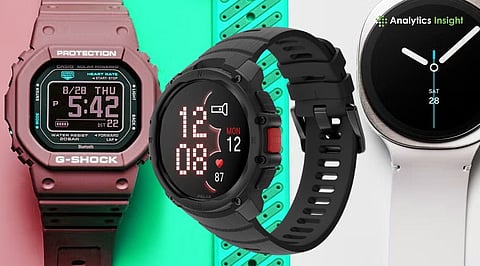
Smartwatches combine calls, notifications, apps, GPS, and health tracking for a complete wearable experience.
Smart bands offer essential fitness and health monitoring features with excellent battery life and affordability.
Fitness trackers focus on detailed workout metrics, activity tracking, and performance improvement for active users.
Wearable technology has evolved far beyond simply counting steps. Today's devices can track various health metrics, monitor workouts, keep you connected, and even simplify everyday tasks in subtle but useful ways. With so many options available, however, choosing the right wearable can quickly become overwhelming.
However, the decision becomes much easier once you understand what each type of wearable is designed to do. Whether you're looking for a smartwatch, a fitness band, or a dedicated fitness tracker, the right choice ultimately depends on how you plan to use it in your daily life.
Wearables are compact devices designed to be worn throughout the day to help monitor your health, fitness, and daily activities. Some focus on smart features such as calls, messages, and app notifications, while others are geared more toward workout tracking, performance monitoring, and detailed health insights.
The most common options available today are:
Before buying one, it helps to understand the strengths of each category.
Smartwatches are some of the most advanced wearables in the market. You can just think of it as a miniature smartphone that sits on your wrist. One of its biggest advantages is convenience. Instead of constantly reaching for your phone, you can check messages, emails, social media notifications, alerts, and incoming calls directly from your watch.
Many smartwatches also allow you to answer calls, respond to messages, and interact with apps without taking out your phone, making them especially useful when you're on the move or have your hands full.
Beyond connectivity, smartwatches are packed with health and fitness features. Most models can track heart rate, blood oxygen (SpO₂) levels, sleep quality, daily steps, calories burned, and various workout activities. Many also include built-in GPS, which is particularly useful for running, cycling, hiking, and other outdoor exercises.
Here are some features that make smartwatches an attractive choice:
Notifications, calls, and messages on your wrist
Advanced health and fitness tracking
GPS for outdoor workouts
Bright and attractive displays
Customizable watch faces and straps
The main downside is battery life. Most smartwatches need charging every one to three days, depending on the usage.
Smart bands are for users who want essential fitness and health tracking features without overspending. They are typically lighter, slimmer, and more compact.
Despite their simpler design, smart bands can still track important health metrics such as steps taken, heart rate, sleep patterns, calories burned, and blood oxygen levels.
Smart bands also provide basic alerts, so you can glance at incoming calls and messages, nothing complicated, just quick visibility.
Here are some reasons why you should opt for a smart band:
Lightweight and comfortable
Easy to use
Good battery life
Affordable pricing
Suitable for everyday fitness tracking
For many people, a smart band offers everything they need without the extra features of a smartwatch.
Also Read: ChatGPT on Your Wrist: How to Integrate it to Smart Watches
Fitness trackers are made for people who take their health and fitness goals seriously. While they may look similar to smart bands, their primary focus is on providing detailed activity and performance insights rather than smart notifications.
These devices can track workouts, automatically detect certain exercises, and deliver in-depth metrics that help users monitor progress and improve their performance over time.
Most fitness trackers include features such as heart rate monitoring, sleep tracking, calorie counting, step tracking, and activity monitoring. Many models are also built to withstand sweat, rain, and intense workouts, making them reliable companions for regular training and outdoor activities.
Top reasons why you should depend on fitness trackers:
Detailed workout tracking
Reliable activity monitoring
Lightweight design
Comfortable during exercise
Better focus on fitness than smart features
If your main goal is improving your fitness, a dedicated fitness tracker can be a great choice.
The wearable market isn't limited to watches and bands, but is expanding with new categories over time. Virtual reality headsets are becoming more popular for gaming, entertainment, and even training.
Audio sunglasses are another interesting option that allows people to listen to music or take calls while staying mindful of their surroundings.
Even if these devices have different purposes, they reflect the same broader trend: wearable tech is increasingly stretching into fresh areas.
This comparison can help narrow down your options based on your priorities.
Choosing the right wearable is not just about features. It is also about finding a device that fits your daily routine.
Start by asking yourself what you want from the device.
If you want notifications, calls, apps, and health tracking in one package, a smartwatch is probably the best option.
If you mainly want step counting, heart rate monitoring, and basic alerts, a smart band may be all you need.
If workouts and fitness tracking are your main priorities, a fitness tracker is usually the better choice.
Some wearables work best within certain ecosystems. For example, Apple Watches offer the best experience when paired with an iPhone. Many other brands support both Android and iOS devices, but it is always worth checking before buying.
Battery life can make a big difference in daily use. Some devices need charging every day or two, while others can last more than a week. If you travel often or dislike frequent charging, a longer-lasting wearable may be a better fit.
A wearable is something you will wear for hours every day. A lightweight and comfortable design is especially important if you plan to wear it while sleeping or exercising.
Water resistance is a useful feature for most users. It adds protection against sweat, rain, and everyday accidents. Active users may find this feature particularly valuable.
Buying a wearable is easier if you pay attention to what you really need. A smartwatch offers an ‘all-in-one’ experience, while a smart band provides you with a calmer and more affordable option, and a fitness tracker is best for fitness enthusiasts.
Before choosing a wearable, consider how you'll use it on a daily basis and how important battery life is to you. Focus on the features you genuinely need rather than those that simply sound appealing. The best wearable isn't necessarily the most expensive, but one that fits into your routine and adds real value to your everyday life.
Also Read: Upgrade Your Wrist: Trending Smartwatches at Crazy Discounts!
1. What is the new smartwatch launched?
Several new smartwatches have launched, including the Samsung Galaxy Watch8 series, Google Pixel Watch 4, and CMF Watch 3 Pro. These models offer improved health tracking, smarter features, better performance, and enhanced battery efficiency.
2. What is the No. 1 smartwatch brand in the world?
Apple remains the leading smartwatch brand globally, thanks to the popularity of its Apple Watch lineup. The brand continues to dominate market share, while Samsung and Huawei remain strong competitors with advanced wearable technology offerings.
3. Which smartwatch should I buy?
The best smartwatch depends on your smartphone and needs. Apple Watch Series 11 is ideal for iPhone users, while Android users may prefer the Google Pixel Watch 4 or Samsung Galaxy Watch 8 for seamless compatibility.
4. What is the most recommended smartwatch?
The most recommended smartwatches include the Apple Watch Series 11, Google Pixel Watch 4, and Samsung Galaxy Watch 8. These devices stand out for their health features, smart capabilities, reliability, and ecosystem integration.
5. Which is India's No. 1 smartwatch brand?
Noise is currently India's leading smartwatch brand by market share, consistently ranking first in shipments. The company is popular for offering feature-rich wearables at affordable prices, while Fire-Boltt and boAt remain key competitors.
