.png)

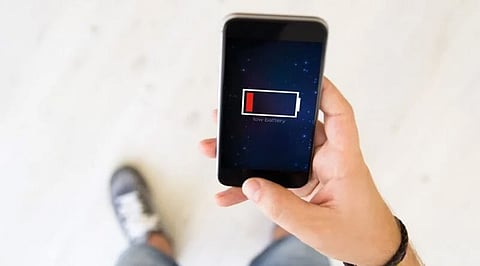
5G does not automatically mean faster battery drain on modern smartphones.
Weak signals, network switching, and demanding apps can increase power consumption.
Simple network settings can help users balance faster connectivity with better battery life.
The idea that 5G always drains smartphone batteries faster is often misleading. Battery consumption depends on several factors beyond the network generation. Signal strength, modem design, network type, usage patterns, and software all matter. Modern 5G hardware has also become more efficient than early implementations. However, 5G can still consume more power under certain conditions. Understanding those conditions can help users improve battery life without giving up faster connectivity.
A smartphone constantly communicates with nearby cellular networks. The modem adjusts its behavior according to signal strength and network conditions. Weak reception can make this process more demanding.
When coverage is poor, the phone may increase transmission power. It may also search for better signals or switch between network technologies. These activities can increase battery consumption. Several studies have also found meaningful differences in power usage among LTE, 5G standalone, and 5G non-standalone.
Therefore, 5G itself is not always responsible. Network conditions often explain the bigger difference.
Also Read: Weekend Sale: Samsung Galaxy AI & 5G Smartphones at Discounted Prices
Signal quality can have a greater impact than the 5G label itself. A strong 5G connection usually requires less effort from the modem. A weak connection can force the phone to work harder.
This becomes noticeable inside buildings and underground locations. Rural areas can also experience weaker coverage. Network congestion can create additional challenges. During periods of network disruption, phones may repeatedly search for connections. This behavior can significantly accelerate battery drain. Users should therefore check their signal strength before blaming 5G.
Not every 5G network operates in the same way. Early 5G deployments commonly used non-standalone architecture. These networks still relied partly on existing 4G infrastructure. That arrangement could require additional radio activity. Standalone 5G uses a dedicated 5G core instead. It can therefore reduce some of the overhead associated with dual connectivity.
However, actual power consumption depends on the network implementation. Device hardware and carrier configuration also influence results. A 2026 comparative study found 5G NSA consumed more energy than LTE. 5G SA also consumed more than LTE in the environments tested. The gap should therefore not be treated as universal.
5G makes high-speed activities easier and faster. Users may stream higher-quality video or download larger files. They may also spend more time using demanding online applications. Those activities naturally consume additional energy. Gaming, video calls, navigation, and high-resolution streaming can drain batteries quickly.
A 5G connection can therefore indirectly increase battery consumption. The network may finish downloads faster, but the phone still performs intensive tasks. Temperature also affects battery performance. Heavy workloads can heat the device and further reduce efficiency.
The situation has improved considerably since the first generation of 5G smartphones. Modern processors increasingly integrate cellular modems into efficient system designs. Manufacturers also use power-saving technologies to reduce unnecessary modem activity. Qualcomm's modem platforms, for example, include dedicated 5G power-efficiency technologies. Its Snapdragon X70 includes PowerSave Gen 3 and Release 16 features.
This means newer smartphones should not automatically suffer from extreme 5G battery drain. Real-world battery life still varies between devices. Battery capacity, display technology, software, and modem efficiency all contribute.
Users do not necessarily need to disable 5G completely. Automatic network selection can provide a better balance. Many smartphones can switch between 4G and 5G depending on conditions.
Using Wi-Fi when available can also reduce cellular activity. Avoiding unnecessary background downloads helps conserve energy. Keeping the phone updated can improve modem and power-management behavior.
If 5G reception is consistently weak, switching temporarily to 4G can help. Some smartphones provide dedicated 5G power-saving settings. Huawei, for example, recommends automatic switching between networks when appropriate. The best approach depends on your location and daily usage.
Also Read: Top 10 Affordable 5G Smartphones You Can Buy in 2026
Sometimes, but not always. Modern 5G hardware is far more efficient than early implementations. Strong coverage can keep battery consumption reasonable. Weak signals, network switching, demanding applications, and high data usage can increase drain. Battery age and screen usage may also have a larger impact.
For most users, there is little reason to avoid 5G solely because of battery concerns. Use automatic network settings and monitor your phone's battery statistics. The real question is not whether 5G drains batteries. It is when 5G causes meaningful additional power consumption. Understanding that difference can help users get faster connectivity without unnecessary battery sacrifices.
Does 5G always drain smartphone batteries faster?
No, 5G does not always cause faster battery drain. Power consumption depends on signal strength, network architecture, modem efficiency, and phone usage. A strong 5G connection may use reasonable power. However, weak coverage can force the modem to work harder. Modern 5G smartphones are also more efficient than early-generation devices.
Why does weak 5G reception affect battery life?
A weak 5G signal can require the smartphone to work harder to maintain connectivity. The modem may increase transmission power or search for a stronger connection. Network switching can also increase energy consumption. This is why battery drain may become noticeable in buildings, underground areas, or locations with limited 5G coverage.
Is 4G more battery-efficient than 5G?
4G can be more power-efficient under certain conditions, particularly when 5G reception is weak. However, the difference depends on the network and smartphone hardware. Modern 5G systems have improved significantly. Users with strong 5G coverage may notice little practical difference during everyday activities.
Does using 5G for video streaming drain more battery?
Streaming can consume significant battery regardless of the network used. 5G may encourage users to stream higher-resolution content because faster speeds make it easier. The screen, processor, speakers, and data connection all consume power. Therefore, video quality and viewing time can sometimes matter more than 5G itself.
Should I turn off 5G to save battery?
Not necessarily. If your phone has strong 5G coverage, disabling 5G may provide little benefit. Automatic network selection can offer a better balance. However, switching to 4G may help when 5G reception is consistently weak. Users should compare their phone's battery performance before changing network settings permanently.
