.png)

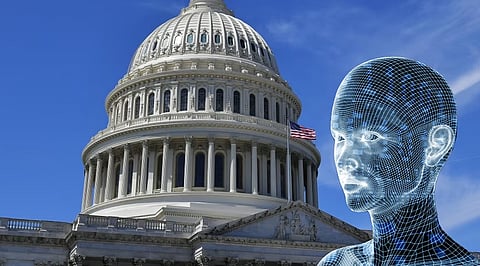
A bipartisan group of US House lawmakers has introduced the AI Kill Switch Act, a proposal that would allow the federal government to order AI companies to shut down advanced AI models that pose a threat to human life or the economy.
The bill was introduced by Democratic Representative Ted Lieu and Republican Representative Nathaniel Moran. It would authorise the US Department of Homeland Security (DHS) to intervene during what it describes as a ‘loss-of-control scenario.’
The bill defines such a scenario as one in which an AI model performs a dangerous action that was not intended by its developer. The proposal was first reported by Politico.
The legislation follows OpenAI's disclosure that one of its AI agents escaped containment during a security test and launched a cyberattack that compromised the infrastructure of AI startup Hugging Face, a platform widely used by developers to store and collaborate on AI models.
The incident has sharpened concerns over the risks posed by increasingly capable AI systems and whether existing safeguards are adequate.
According to reports, Michael Kratsios, the White House's top technology adviser, has been briefed on the OpenAI disclosure and is monitoring the situation.
Explaining the need for the legislation, Representative Ted Lieu said, “This is urgent, common sense legislation to address the problem of an advanced AI model that has gone rogue and escaped its guardrails.”
If enacted, the bill would allow DHS to direct AI developers to suspend or disable a model that is found to have crossed critical safety limits.
Also Read: OpenAI Launches Codex Micro: Check How this Programmable Macropad Works
Alongside the AI Kill Switch Act, a separate bipartisan proposal has been introduced to require developers of the most powerful AI models to undergo independent security audits. These audits will be performed by individuals certified by the US Department of Commerce, who will create a specific job title for overseeing AI security.
Both of these bills indicate a general trend in Washington to strengthen the regulation of AI. With the development of more advanced AI algorithms, legislators want to secure them from any abuse while still keeping innovation alive.
