.png)

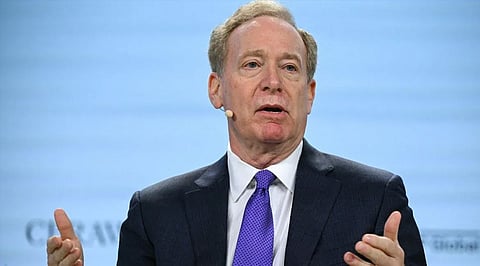
Microsoft President Brad Smith has warned that US green card restrictions could weaken technology leadership and push skilled foreign workers overseas. In an interview reported by Politico on Thursday, October 15, Smith criticized the Trump administration’s immigration measures and defended Microsoft’s H-1B visa practices. He said limiting permanent residency pathways could 'cripple' the US technology sector for more than a generation.
Smith’s comments followed Vice President JD Vance’s October 8 announcement targeting Microsoft and seven other companies. The administration plans to restrict their ability to seek employment-based green cards for skilled foreign workers. Smith argued that blocking permanent residency pathways could discourage international engineers from building long-term careers in the United States.
Smith also rejected Vance’s accusations that Microsoft had abused the H-1B visa program, calling them 'completely off base.' He denied claims that foreign-born employees receive lower pay than American workers. According to Smith, Microsoft applies the same compensation system regardless of employees’ immigration status.
The Microsoft president also highlighted the company’s domestic hiring record during the debate. He said Microsoft hired more than 9,000 US-born workers last year, a contribution he believes critics have overlooked. The company maintains that international recruitment can complement domestic hiring and support the technology industry.
The dispute highlights a policy challenge for Washington as technology companies compete for expertise in artificial intelligence, cloud computing and cybersecurity. Industry leaders argue that uncertainty around permanent residency could push engineers toward competing technology hubs abroad. Countries offering clearer immigration pathways could benefit from that talent shift.
The restrictions concern employer-sponsored green card applications through the labor certification process. They do not automatically cancel existing H-1B visas or require affected workers to leave the country. However, the uncertainty could complicate long-term career planning for employees who depend on employer sponsorship.
The White House and Microsoft did not immediately respond to Reuters’ requests for comment. The dispute leaves technology employers balancing domestic hiring priorities against their need to recruit and retain specialized global talent.
Also Read: Microsoft Takes Down Global Scam Network Behind 1 Billion Messages
