.png)

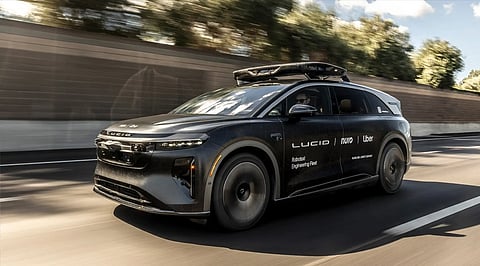
Imagine booking an Uber and finding nobody in the driver's seat. That is the experience Uber, Lucid and autonomous vehicle company Nuro are working towards. Their robotaxi project has now moved into a new phase, with fully driverless vehicles beginning tests on public roads in California.
The trials are taking place around Palo Alto, Mountain View, Los Altos and Sunnyvale. Until recently, Nuro's test vehicles still had safety operators inside. Their removal is significant: the companies now have to demonstrate that the technology can handle everyday traffic without someone ready to take control.
The cars are based on Lucid's Gravity electric SUV, but there is more to the partnership than simply putting self-driving software into an electric vehicle. Lucid supplies the vehicle, Nuro develops and operates the autonomous driving technology, and Uber will connect the service with its existing ride-hailing platform.
Also Read: Uber Tests Recorded Rides: What Passengers and Drivers Should Know
The SUVs use cameras, lidar and radar to read their surroundings and navigate roads. Lucid has already delivered more than 100 updated vehicles for the programme, giving the partners a growing fleet to work with.
The first people expected to ride in these vehicles will be company employees. Public rides are planned for the first quarter of 2027, later than the original target of launching by the end of 2026. That delay gives the companies additional time to test the system before opening it to paying customers.
Uber is making a substantial commitment to the project. It has agreed to purchase at least 35,000 Lucid vehicles equipped with Nuro's autonomous technology. These cars will be operated by Uber and its fleet partners.
Also Read: Uber Kids: Parents Can Now Monitor Children's Rides Live
Each company has a different role, but the commercial test will be shared. Nuro must prove its driving system works safely, Lucid has to deliver vehicles that can support it, and Uber needs to turn the technology into a service people will actually use.
Removing the safety driver is progress. Getting passengers to trust an empty driver's seat will be the harder part.