.png)

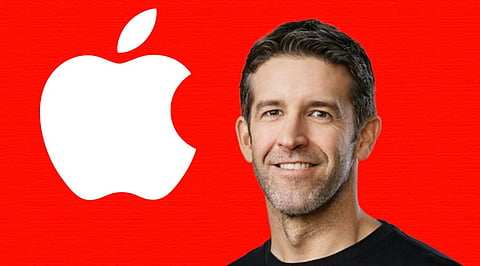
John Ternus took over as Apple CEO on September 1, ending Tim Cook’s 15-year tenure at the Cupertino-based company. The 51-year-old hardware veteran inherited Apple as AI competition intensified worldwide.
Ternus assumed leadership after rising from Apple’s design team to hardware engineering chief. His promotion positioned hardware innovation as a key route for Apple to strengthen its AI position.
The leadership change placed Ternus at the center of China supply chain risks and US political pressure. Apple shifted some production toward India and Vietnam, while China remained vital.
Ternus also faced pressure to close Apple’s AI gap against OpenAI, Google, and Microsoft. His strategy centered on connecting AI with devices, custom silicon, and software rather than cloud models alone.
Dan Ives of Yorkville Ives & Co. said, “Tim Cook left the house in phenomenal order.” He added that Ternus now had to define Apple’s AI chapter. Ives expected Ternus to protect the supply chain while focusing on hardware innovation.
Carolina Milanesi of Creative Strategies argued that hardware remained central to technology adoption. Her view supported Ternus’s product background as Apple entered a tougher AI race.
Ternus joined Apple in 2001 after studying mechanical engineering at the University of Pennsylvania. He later helped oversee products across the iPhone, Mac, iPad, and AirPods lines. His engineering record gave him strong product knowledge, while global politics presented a newer leadership test.
Tim Cook became Apple’s executive chairman after leaving the CEO role. The transition allowed Cook to continue engaging policymakers while Ternus focused on products and AI.
Apple’s September 9 event will be Ternus’s first major public test as CEO. The company is expected to showcase a foldable iPhone and AI-related updates. The event will therefore serve as an early measure of Ternus’s ability to turn Apple’s hardware strength into AI momentum.
Also Read: Tim Cook’s 15 Years at Apple: Key Numbers Behind His Legacy
