.png)

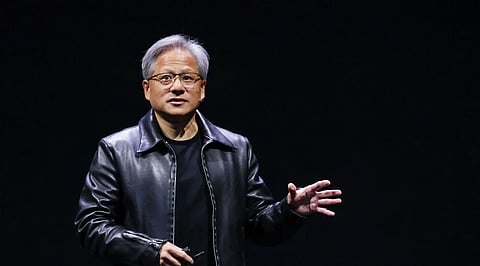
Nvidia CEO Jensen Huang has rejected Bill Gates’ proposal to tax robots and AI tokens. Both leaders expect artificial intelligence to reshape employment, but they disagree on the government response.
Gates wants tax policy to slow automation and fund worker support. Huang expects AI to create more jobs than it removes, although he accepts that many roles will change.
Huang told Fox Business, “I love the heck out of Bill … but I don’t see what he sees. I see something very, very different. And so my remedies will be a little different.”
Huang said he supports taxation. “I’m in favor of taxes,” Huang said. He added that productive people and companies can contribute to society through taxes. Still, he argued that policymakers have several ways to distribute wealth created by AI.
Huang said higher productivity allows companies to invest, expand and hire. He expects AI to create jobs on a scale that previous technology shifts did not reach. He acknowledged that automation will disrupt some workers and said affected people will need support.
Gates renewed his robot tax proposal in an essay published on August 26. The essay, titled “The turbulent AI era is here. The choices we make now are critical,” examined automation, employment and public policy.
The Microsoft co-founder compared payroll taxes with rules for business equipment. “Right now, if you’re an employer and you hire someone, you pay payroll taxes on their earnings,” Gates wrote. “But if you buy a robot, you can usually write it off right away as a business expense.” He said that difference encourages companies to replace workers with machines.
Gates said automation could reduce government income-tax revenue if machines take over human work. He proposed a tax that could moderate the pace of replacement while raising money for retraining and a stronger safety net. He did not specify a rate or explain how officials should calculate the levy.
Gates first raised the robot tax idea in 2017. Many economists opposed it and described the proposal as a tax on productivity. Its return now extends the debate to AI systems.
Huang expects AI investment to support a new period of industrial development in the United States. He said the economy will need white-collar employees and more skilled workers who build physical infrastructure.
Electricians, plumbers and construction workers could see stronger demand while companies expand data centers. These facilities need electrical systems, cooling equipment, water infrastructure and regular maintenance. Huang has repeatedly pointed to these trades when discussing employment linked to AI growth.
“We want to reindustrialize the United States. We want to create more jobs,” Huang said. He connected AI spending with factory construction, energy systems and other projects that require hands-on labor.
The disagreement centers on the pace and distribution of economic change. Gates favors tax changes that could reduce incentives for rapid worker replacement. Huang supports help for displaced workers but opposes a direct tax on robots and AI use. Neither disputes that AI will alter jobs. Their split concerns whether governments should directly tax the technology or use other policies to share its gains.
Also Read: Bill Gates Sounds Alarm on AI, Cybersecurity: Impact on Future Jobs
