.png)

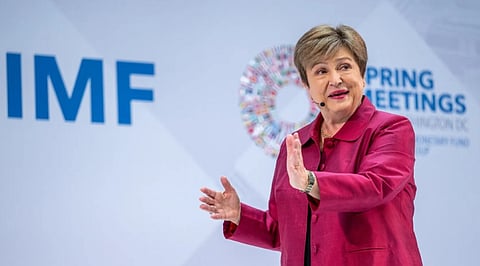
International Monetary Fund (IMF) Managing Director Kristalina Georgieva has warned that artificial intelligence could significantly reshape employment, education and government finances. He urged policymakers to act before the disruption deepens.
Speaking at the IMF and World Bank annual meetings in Bangkok on October 12, Georgieva described AI as a ‘slow-moving tsunami’ that could have far-reaching consequences for workers and economies worldwide. The IMF estimates that AI could augment, downgrade, or eliminate 40% of jobs over time.
Georgieva said AI was already reducing demand for workers who perform routine, repetitive tasks. While automation is changing the nature of work, some lower-paying jobs are growing in sectors such as construction and data centers.
An initial IMF study found that 10% of jobs in the United States already required AI skills, highlighting how the technology is reshaping workplace requirements.
The effects could be particularly challenging for young people entering the workforce. Singapore President Tharman Shanmugaratnam, speaking at the same event, warned that demand for first jobs after graduation was declining.
He urged governments to address the shrinking opportunities for graduates, particularly in sectors most exposed to AI. He also cautioned that the technology could widen employment and economic-growth gaps between advanced and developing economies.
Also Read: AI Layoffs vs AI Hiring: How Firms Are Restructuring Jobs in 2026
Georgieva said AI's effects would extend beyond employment to public finances. As economic activity shifts from labor towards capital, governments could face pressure on tax revenues traditionally generated through wages and employment.
She called on policymakers to reassess education systems and prepare workers for labor market changes. While the full impact of AI remains difficult to predict, she stressed that governments should examine emerging trends and respond without delay.
Despite the risks, AI investment is also supporting economic expansion. Georgieva said strong investment in AI infrastructure was helping keep global growth around 3%.
The investment boom could raise growth in advanced Asian economies by 0.5 to 1 percentage point and in emerging Asian economies by 0.2 to 0.8 percentage points.
World Bank President Ajay Banga highlighted the potential of smaller-scale AI applications to improve productivity in agriculture, healthcare and education.
Policymakers will need to ensure that AI-driven growth creates opportunities for workers while limiting job losses, inequality, and pressure on public finances.
