.png)

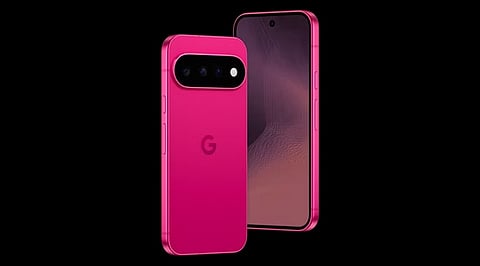
Google Pixel 11 GrapheneOS support stopped at a partial port, according to the GrapheneOS Foundation. The group says Google’s newest phones lack ARM Hardware Memory Tagging Extension support, known as MTE. Its report covers the Pixel 11, 11 Pro, 11 Pro XL, and 11 Pro Fold.
Therefore, it cannot finish a standard release for the series. The foundation maintains the feature forms a core requirement for devices receiving its official support throughout their lifespan after launch.
Google introduced the Pixel 11 family on August 12 and began sales on August 20. Each phone uses the Tensor G6 platform. Google markets Tensor G6 and Titan M3 as its strongest Pixel defense system. Nevertheless, its launch material does not list MTE support. Google has not publicly confirmed the foundation’s technical findings or its cost claim.
The GrapheneOS Foundation said developers created a partial port after one week. They then found no MTE support in software or firmware. The group added that hardware support was ‘near certainly’ absent. This shows developers have not publicly verified the final hardware position. However, the project says it cannot complete the port under its current security rules.
GrapheneOS also claimed Google ’appears’ to have removed MTE to save money. Google has not confirmed that explanation. The foundation provided no cost documents, supplier data, or engineering statement supporting the claim. Accordingly, the alleged motive should stay attributed to GrapheneOS. The reported lack of MTE support, not the motive, stopped the current port.
MTE is an ARM hardware feature that detects certain memory handling errors. These errors include use-after-free faults and buffer overflows in native code. Attackers can sometimes use such faults to take control of a process. MTE checks memory tags and can stop a process when tags do not match. Consequently, it can block some exploitation attempts.
GrapheneOS uses hardware memory tagging across its base system, kernel, and standard processes. Developers temporarily disable it only for a small number of device-specific processes. The project also built MTE support into hardened_malloc in October 2023. Google documentation lists Pixel 8 through Pixel 10a among supported devices. It does not list any Pixel 11 model.
The missing GrapheneOS port does not mean Pixel 11 phones lack all security protections. Google says Tensor G6 works with the new Titan M3 security chip. The company also says secure boot uses post-quantum cryptography. Moreover, every Pixel 11 model receives seven years of operating system, security, and Pixel Drop updates. These features operate within Google’s Android software.
The issue specifically affects users who want GrapheneOS and its full hardening standards. GrapheneOS currently recommends Pixel 8, Pixel 9, and Pixel 10 devices on its website. Its requirements for future phones include hardware memory tagging, alternate operating system support, and timely security patches. Therefore, buyers seeking Google Pixel 11 GrapheneOS support cannot install a completed official build at present.
The foundation may redirect more work toward other hardware. It has already discussed future support for certain Motorola phones that meet its standards. Still, no full Pixel 11 port is available, and the project has not published a completion timetable. Unless the technical position changes, existing Pixel 8 through Pixel 10 devices remain the supported Pixel options.
Also Read: Gboard Rambler on Pixel 11 Cleans Speech with a Single Tap
