.png)

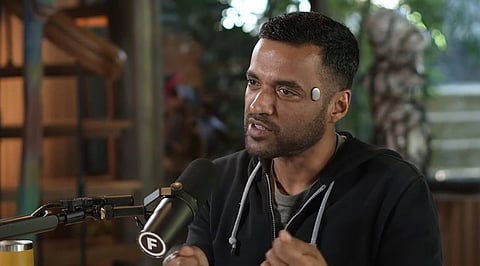
Deepinder Goyal’s Temple has released its first brain flow study, showing promising results in tracking cerebral blood flow changes. The study appeared on medRxiv on September 4, 2026, and tested 23 healthy adults in Meerut. Researchers compared Temple’s Brain Flow index with Transcranial Doppler during exercise and posture changes.
The results showed Temple closely followed middle cerebral artery blood velocity during both tests. Researchers recorded median within-person correlations of 0.795 during cycling and 0.799 during postural changes.
The findings suggest Temple can detect relative changes linked with cerebral blood flow dynamics. However, the study does not prove direct brain measurement through the wearable.
Temple uses an optical sensor placed near the temple to generate its proprietary Brain Flow index. The technology analyzes optical signals from tissue near the skin surface. Transcranial Doppler, meanwhile, measures blood velocity inside the middle cerebral artery using ultrasound.
The study also offers an important clue against a simple heart rate explanation. During the posture test, heart rate decreased while middle cerebral artery blood velocity increased. Temple’s Brain Flow index followed the cerebral blood velocity pattern during the same transition.
Several limitations still keep the Temple wearable from becoming a proven brain monitoring device. The study used normalized relative signals instead of absolute blood flow measurements. Optical readings near the temple can also capture signals from the scalp and other superficial blood vessels.
The study involved a small group of young, healthy adults and remains a preprint without peer review. Temple Pvt Ltd funded the research, although the authors reported no competing interests.
Goyal called the study ‘the first step’ while sharing the findings on X. The next stage will require independent studies that separate scalp circulation from brain circulation. Larger and more diverse trials could determine whether Temple’s Brain Flow index reflects genuine cerebral activity.
Also Read: Beyond Temple: 7 Brain-Tracking Wearables You Can Actually Buy Today
