.png)
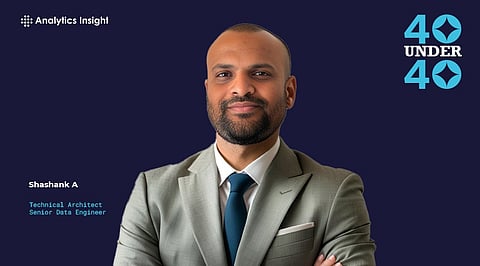
Shashank Akinapalli on AI, Cloud & Enterprise Data Innovation

Shashank Akinapalli – Driving Enterprise Data Innovation Through Scalable Cloud and AI-Powered Data Engineering
Shashank Akinapalli is a Senior Data Engineer and Enterprise Data Architect with more than 14 years of experience designing enterprise-scale data engineering solutions, cloud modernization initiatives, and AI-enabled analytics platforms for Fortune 500 organizations across the banking, insurance, healthcare, and retail industries. He holds a Master of Digital Sciences with a specialization in Data Science from Kent State University, a foundation that has strengthened his ability to bridge advanced research with real-world enterprise innovation. Throughout his career, he has led the design and implementation of mission-critical data platforms that have transformed how organizations integrate, govern, and leverage data to drive strategic decision-making and digital transformation.
His technical expertise spans cloud data platforms, enterprise data warehousing, distributed ETL architectures, AI-enabled data engineering, Snowflake, Databricks, AWS, IBM DataStage, DBT, and modern data governance frameworks. During his engagements with USAA, he played a leading role in architecting innovative enterprise data products, including MemberPulse360 Analytics, a comprehensive social intelligence platform that transformed unstructured member interactions into actionable business intelligence, and the Affinity & Affiliation Revenue Flow platform, which automated partner revenue attribution and commission management across military affinity organizations. These initiatives significantly enhanced operational efficiency, strengthened enterprise data governance, and enabled scalable, data-driven business operations.
Beyond industry leadership, Shashank has established himself as an active contributor to the global research community. He has authored eight peer-reviewed research publications that have earned recognition within the international research community, contributing valuable insights into enterprise data engineering, cloud modernization, artificial intelligence, autonomous data integration, and resilient analytics architectures. His expertise has led to invitations to peer review scholarly publications, evaluate international conference submissions, and serve as a juror for prestigious innovation and business awards. He is a Senior Member of IEEE and a Hackathon Raptors Fellow, reflecting his professional standing within the technology community.
His contributions extend beyond enterprise implementations through two patent filings in the United States and India, multiple technology media publications, invited speaking engagements, and service as a judge for international innovation and business excellence awards. By combining academic research with large-scale enterprise implementation, Shashank continues to advance the evolution of intelligent data engineering, cloud-native architectures, and AI-driven data ecosystems that deliver measurable business value while shaping the future of enterprise technology.
Analytics Insight independently selected Shashank Akinapalli for a professional interview concerning his work and accomplishments in enterprise data engineering, artificial intelligence, cloud modernization and enterprise technology.
Following its editorial evaluation of his professional background, accomplishments and contributions to the technology field, Analytics Insight subsequently selected/shortlisted Mr. Akinapalli for its 40 Under 40 recognition.
What inspired you to pursue a career in Data Engineering and Enterprise Architecture?
I've always been fascinated by how data drives critical business decisions. Early in my career, I realized that organizations often possessed enormous volumes of data but struggled to transform it into actionable intelligence because of fragmented systems and legacy architectures. That realization inspired me to pursue data engineering and enterprise architecture, where technology can directly influence strategic business outcomes.
Over the past fourteen years, I have focused on designing enterprise-scale data platforms that improve operational efficiency, strengthen governance, and enable organizations to make faster, evidence-based decisions. Working across financial services, healthcare, retail, and supply chain industries has reinforced my belief that modern data architecture is not simply an IT capability—it is a strategic business asset. My passion continues to be building intelligent, scalable, and resilient data ecosystems that help organizations embrace innovation while preparing for an AI-driven future.
What has been the most significant milestone in your 14+ year journey?
One of the defining milestones in my career has been leading the design and modernization of enterprise data platforms supporting large-scale cloud transformation initiatives. Contributing to the migration of mission-critical workloads from legacy on-premises environments to modern cloud architectures demonstrated how strategic data engineering can fundamentally reshape enterprise operations.
Beyond technical execution, this experience strengthened my ability to lead architectural decisions, establish reusable engineering frameworks, mentor cross-functional teams, and align technology investments with long-term business objectives. Seeing enterprise platforms evolve into scalable, governed, cloud-native ecosystems capable of supporting advanced analytics and AI has been one of the most rewarding accomplishments of my professional journey.
Which project or achievement are you most proud of, and why?
Among the many initiatives I have led, I am particularly proud of architecting enterprise data solutions such as the MemberPulse360 Analytics platform and the Affinity & Affiliation Revenue Flow platform.
MemberPulse360 transformed fragmented customer engagement data from multiple digital channels into a unified intelligence platform capable of delivering near real-time insights for customer experience, operational analytics, and strategic decision-making. The platform introduced scalable automation, advanced governance, and reusable engineering frameworks that significantly improved enterprise visibility and reporting capabilities.
Similarly, the Affinity & Affiliation Revenue Flow platform automated partner enrollment processing, commission calculations, revenue attribution, and enterprise reporting across numerous affinity organizations. By replacing manual, spreadsheet-driven processes with automated, governed data pipelines, the solution substantially reduced processing time, improved operational accuracy, enhanced audit readiness, and established a scalable framework capable of supporting future organizational growth.
What makes these projects especially meaningful is that their impact extended well beyond technology—they improved business efficiency, strengthened governance, enhanced decision-making, and created sustainable enterprise capabilities that continue to deliver long-term organizational value.
How has cloud modernisation transformed enterprise data management?
Cloud modernization has fundamentally changed how enterprises manage, govern, and derive value from their data. Traditional architectures often relied on isolated data warehouses, complex maintenance cycles, and limited scalability. Modern cloud platforms have shifted organizations toward unified, elastic, and highly governed data ecosystems.
Cloud-native technologies enable organizations to process significantly larger datasets, automate data pipelines, improve disaster recovery, strengthen security, and accelerate analytical innovation. More importantly, they provide the architectural foundation necessary for artificial intelligence, machine learning, real-time analytics, and autonomous decision-making.
In my experience, successful cloud modernization is not simply about migrating workloads—it is about redesigning enterprise data architecture to become scalable, resilient, intelligent, and future-ready.
What role do you see AI playing in the future of data engineering?
Artificial Intelligence will fundamentally redefine the discipline of data engineering. Rather than replacing engineers, AI will augment their capabilities by automating data quality monitoring, pipeline optimization, metadata generation, anomaly detection, schema evolution, and operational troubleshooting.
I believe the next generation of enterprise platforms will become increasingly autonomous through self-healing pipelines, intelligent orchestration, predictive data governance, and AI-assisted architecture optimization. Data engineers will spend less time maintaining infrastructure and more time designing intelligent systems that continuously improve themselves.
Organizations that combine robust data engineering practices with responsible AI governance will be best positioned to create scalable, trusted, and business-driven data ecosystems
What is the biggest challenge you've overcome in your career?
One of the most challenging experiences in my career involved modernizing complex enterprise data environments while ensuring uninterrupted business operations. Migrating highly interconnected legacy platforms that support critical financial and operational processes requires balancing technical innovation with regulatory compliance, data integrity, security, and organizational change management.
Successfully delivering these initiatives required extensive collaboration across engineering teams, business stakeholders, architects, governance groups, and executive leadership. It reinforced that technical expertise alone is insufficient—successful transformation depends equally on communication, strategic planning, leadership, and the ability to build consensus around a shared vision.
What advice would you give to aspiring data professionals?
Technology evolves rapidly, but the underlying principles of good engineering remain constant. Build a strong foundation in data modeling, distributed systems, software engineering, cloud architecture, and data governance before focusing on specific technologies.
Equally important is cultivating curiosity and contributing beyond day-to-day project work. Publishing research, pursuing patents, participating in technical communities, reviewing scholarly work, speaking at conferences, and mentoring others not only accelerate professional growth but also help advance the broader technology ecosystem.
Most importantly, strive to solve meaningful business problems rather than simply implementing technology. The most impactful engineers are those who create solutions that deliver measurable and lasting value.
What are your goals and aspirations for the next five years?
Over the next five years, I aim to continue advancing enterprise data engineering by developing intelligent, AI-enabled architectures that improve scalability, resilience, governance, and automation across global organizations.
I also intend to expand my research contributions through high-impact scholarly publications, patents, international speaking engagements, technical judging, and collaboration with academic and industry communities. Sharing practical knowledge that bridges enterprise implementation with emerging research is an area I am deeply passionate about.
Ultimately, my aspiration is to contribute to shaping the next generation of enterprise data architecture by building technologies that enable organizations to fully realize the potential of artificial intelligence, autonomous data platforms, and data-driven innovation while mentoring the next generation of technology leaders.
