.png)

Whether you are rolling out your first podcast or just, you know, upgrading your recording setup, picking the right microphone is one of the biggest choices you will make. A solid mic boosts vocal sharpness, trims annoying background buzz, and makes your whole episode feel way more polished. The cool part is there are fantastic microphone choices across every budget, from budget-friendly yet capable dynamic microphones for early starters, up to professional studio mics that radio hosts would actually take seriously.
Below are the top podcast microphones, chosen for what they do best, the situations they fit, the standout features, and the usual price range so you can match them to your recording setup.
Probably one of the best podcast microphones out there these days is the Shure MV7+. It’s built on the backbone of the famous SM7B, and it includes both USB-C and XLR connections, so it works for beginners as well as more seasoned podcasters. You also get Auto Level Mode, protection against plosives, real-time DSP, plus a touch LED control panel you can tailor, so your workflow feels less fiddly.
Best for: Podcasters, streamers, and creators who want studio-grade sound without the drama.
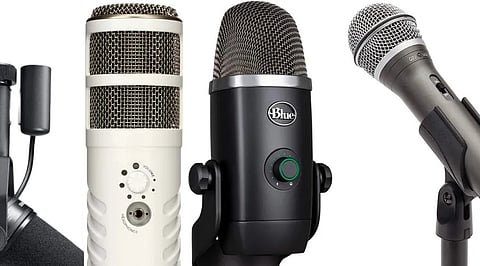
The Rode PodMic is a microphone designed especially for podcasts. It captures beautiful, warm vocals while filtering out unnecessary room noise. Its all-metal build makes the microphone highly durable.
Best for: Dedicated podcast studios and long-form interviews.
The Hollyland Lark M2 is a portable wireless microphone that is designed for people who like being on the go. The device supports 48kHz/24-bit recording, AI noise cancellation, and works within a 300-meter range, offering up to 40 hours of battery life with a charging case.
Best for: Mobile podcasts, YouTube content, and outside interviews.
BOYALINK 3 is a multipurpose wireless lavalier microphone that can be paired with smartphone cameras and laptops. And with AI noise reduction, USB-C, and the 3.5 mm connection it comes with, plus a wireless range that can reach up to 1,000 feet, it’s kind of perfect for field recording too.
Best for: Interview podcasts and also those traveling videos.
The MK 4 is a large-diaphragm condenser microphone designed for picking up natural, clear vocals. With its low self-noise and wide frequency range, it's a solid choice for voice-over recordings and studio podcasts, especially if you want that crisp sound.
Best for: Home studios, voice talents.
If there are no budgetary constraints, the Neumann TLM 102 will bring exceptional sound quality to broadcasts. A large-diaphragm condenser microphone will pick up every detail from vocals while providing the lowest possible self-noise level.
Best for: Broadcast stations, podcasts, voice talent.
Multiple host recordings can be tough, but with the Hollyland Lark MAX 2, things get easier. This four-transmitter wireless kit is made for multi-person podcast recording, and it also has AI noise cancellation so the sound stays clean, even when you are doing roundtable talks or running live shows.
Best for: Podcasts with more than one host.
The AT2020USB-X by Audio-Technica tends to be a go-to for newer podcasters because it is plug-and-play, the audio comes out really clear, and it is easy to use via USB-C; plus, you can do headphone monitoring without messing around too much, which is honestly a nice touch.
Best for: Solo podcasts and voice recording.
Blue Yeti remains a very popular USB microphone. Multiple pickup patterns let users record solo podcasts, interviews, and even group talks without needing any other equipment.
Best for: Beginners looking for an all-in-one USB microphone.
The Samson Q2U still kinda feels like one of the best value-for-money podcast microphones out there. With its USB plus XLR support, beginners can start with a pretty straightforward setup while leaving space for later upgrades. It is simple enough to begin today and flexible enough not to feel limited tomorrow.
Best for: New podcasters.
Also Read: 10 Best Headphones for Noisy Call Environments and Crystal Clear Mic Quality
What is the best microphone for podcasting? Given your recording location and technique, other podcast microphones will suit you more. For indoor recordings, it is quite obvious that they will be very interested in the Shure MV7+ and Rode PodMic because of their excellent voice quality. Outdoor interview shooters and smartphone users could try out the wireless solutions from Hollyland Lark M2 and BOYA BOYALINK 3. Those looking for top-of-the-line studio-grade microphones would be interested in Neumann TLM 102 or Sennheiser MK 4. But regardless of budget, purchasing a good microphone will significantly increase the quality of your show.
The Blue Yeti and Samson Q2U are excellent beginner choices, offering simple setup, reliable performance, and impressive sound quality at affordable prices.
Yes, modern USB microphones provide excellent audio quality, easy plug-and-play connectivity, and are ideal for solo podcasters and beginners.
USB microphones connect directly to computers, while XLR microphones require audio interfaces but offer greater flexibility and professional-grade recording quality.
The Hollyland Lark MAX 2 supports four transmitters simultaneously, making it ideal for interviews, panel discussions, and multi-host podcast recordings.
Yes, the Shure MV7+ combines USB-C and XLR connectivity, smart audio processing, and broadcast-quality sound, making it a versatile long-term investment.
