.png)

Discover common resume mistakes recruiters instantly notice, along with practical solutions to fix them effectively today.
Learn ATS-friendly formatting techniques to improve resume visibility in automated recruitment screening processes.
Showcase measurable achievements, relevant skills, and tailored content to increase interview opportunities significantly everywhere.
In today’s fiercely competitive job market, even highly qualified candidates are being overlooked because of one simple reason: a weak resume. Indeed, recruiters spend no more than 10 seconds reviewing your resume before deciding whether to move you forward for an interview.
More and more, resumes have to pass through the Applicant Tracking System (ATS) filter to reach recruiters’ eyes. Thus, poor formatting, descriptions, and content will cause applicants to miss out on job interviews, even if they have appropriate qualifications. The career specialists note that there is no need to embellish the experience; instead, you need to present it appropriately.
The first thing job seekers do wrong is submit only one resume to prospective employers. Even though it seems easier, it does not guarantee that the resume will include all the keywords and skills required by the description. It is why ATS measures resume matching with the job description.
Another mistake is to use a resume as a job description, in which all responsibilities, such as ‘managing a team’ or ‘answering clients’ questions,’ should be listed. In this case, no information is provided on real achievements and results that demonstrate an applicant’s ability to deliver the desired outcome.
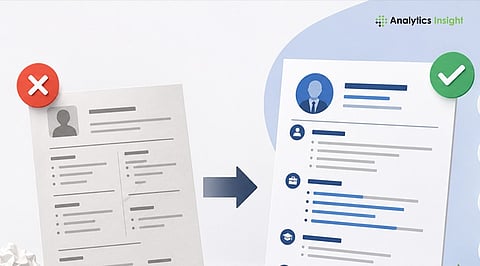
However, a resume that looks good is not necessarily effective. Overly designed templates packed with images, icons, tables, and text boxes may puzzle the ATS, causing it to omit some essential information. The best way is still a neat resume with a well-organized layout structure.
The basic rules of formatting may be extremely effective:
Use common heading titles such as Work Experience, Skills, and Education.
Use a single font style.
Avoid using headers or footers for contacts.
Use bullets rather than paragraphs.
Upload your resume in the requested format.
Job seekers should use achievement-oriented statements rather than task-oriented ones. Numbers add immediate context and credibility.
For example, instead of stating:
“Accountable for managing the social media accounts.”
State the following:
“Raised social media engagement rate by 42% within six months.”
Also, instead of simply stating ‘efficiencies,’ specify the amount of time or effort saved. This helps the recruiter gauge the candidate’s potential.
Tailoring a resume has become not a luxury but rather an expectation from job seekers. In a job posting, one can find all the necessary information about the skills, certifications, and work experience the company wants.
The candidates need to understand all the details in the job posting and include relevant keywords in their resumes. One needs to be very careful, as a sophisticated ATS can pick up too many irrelevant keywords in a resume.
Even small mistakes may result in the rejection of otherwise perfect candidates. Spelling errors, incorrect dates, poor formatting, and overused words such as ‘excellent’ and ‘outstanding’ without supporting evidence decrease your credibility.
However, resumes must be written clearly and concisely. Adjectives such as Led, Developed, Implemented, Designed, and Delivered sound better than Responsible for.
Also Read: How a Networking Resume Can Accelerate Your Career in 2026
Before submitting an application, one should ensure that the resume:
It aligns with the specific job description.
Feature accomplishments whenever possible.
Has a format that the automated tracking system can process.
Highlights relevant skills.
Possesses a professional summary and not a long objective.
It is free of grammatical and spelling mistakes.
Doesn’t contain unnecessary or outdated information.
Also Read: Top AI Resume Builder Tools in 2026
A poorly written resume does not always mean the person is not talented or lacks experience. Sometimes, it means the person is unable to present their achievements and skills, along with their career path, in a way that attracts recruiters.
In today’s world, as the recruiting process begins with ATS screening resumes before they even reach recruiters, a resume should do more than merely list previous work experience.
Therefore, it is necessary to view a resume as a marketing tool that focuses on achievements, a specific skill set, and the value the candidate can add to the prospective employer.
1. Why is an ATS-friendly resume important?
An ATS-friendly resume improves visibility during automated screenings, increasing the likelihood of reaching recruiters and securing interview opportunities for suitable positions.
2. How long should a resume ideally be?
Most professionals should keep resumes to one page, while experienced candidates may use two pages if relevant achievements justify.
3. Should I customize my resume for every job application?
Yes. Tailoring your resume with relevant keywords and skills improves your ATS rankings and effectively demonstrates alignment with specific job requirements.
4. What should I include instead of listing job responsibilities?
Focus on measurable achievements, quantifiable results, and business impact using action verbs to clearly demonstrate your professional contributions and value.
5. How often should I update my resume?
Update your resume every six months or after significant achievements, certifications, promotions or career changes to keep it accurate and competitive.
