.png)

AI helps retailers deliver personalized product recommendations and improve customer experiences.
Agentic Commerce allows AI agents to compare products, check prices, and assist with purchases.
Generative AI improves retail marketing, product content, inventory planning, and daily operations.
Artificial intelligence (AI) has changed the way retailers sell, serve customers and run their days. Online shoppers want quick answers, product suggestions that make sense and a checkout that doesn't fight them. Retailers have to give them all that while keeping stock in order, watching costs and holding their own against the big marketplaces. AI offers new ways to cope, from product search right down to the warehouse floor, and it now does a lot more than power chatbots and ‘you may also like’ boxes.
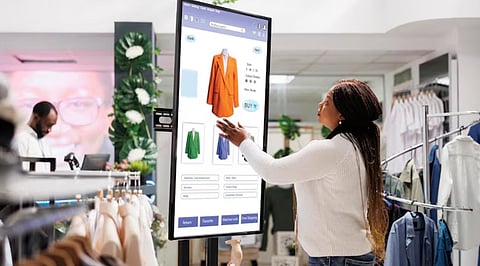
AI learns what a customer likes from past purchases, searches, product views and saved preferences. Online stores then use that to suggest things that fit. Someone who keeps buying running shoes might open the home page and find sportswear, fitness gear and the latest shoe models waiting. Retailers can also send discounts that actually apply, tailor their emails and guess what a customer will want next. When it works, shoppers are happier and sales go up.
Agentic commerce is one of the big retail stories of 2026. A customer gives an AI agent a clear request, and the agent handles the legwork. Say a shopper wants a laptop under USD 1,000 with 16 GB of memory, good battery life and solid reviews. The agent compares models, checks prices, goes through the features and comes back with a few good options. Some can even fill the cart and help at checkout.
McKinsey research from October 28, 2026, surveyed about 21,000 consumers across 11 markets. People are using AI more when they shop, and more of them are buying straight through AI tools. Salesforce has also launched Agentforce Commerce tools for shoppers, buyers and merchants. Digital assistants are starting to carry much of the effort of deciding what to buy.
A popular product that runs out means a lost sale. A warehouse stuffed with things nobody wants means wasted money. AI helps with both by forecasting demand, checking stock and sharpening supply plans. It looks at past sales, seasonal swings, local demand and market changes to work out what will sell, so retailers can set stock levels and send goods to the right stores and warehouses.
It also helps with delivery routes, warehouse tasks and order fulfilment. MIT research on omnichannel supply chains found that 63% of surveyed organizations used AI for demand forecasts, 60% for inventory management and 61% for warehouse management. Retailers lean on it for the core of the business now, not only for what customers see.
Also Read - Artificial Intelligence in Manufacturing: Applications and Future Developments
Typing words into a search box doesn't always turn up the exact thing a shopper has in mind. Visual AI fills the gap. Upload a photo of a dress, a bag, a chair or a pair of shoes and the store finds similar items. Virtual try-on lets people preview clothes, glasses and makeup before paying, and furniture shops can show how a sofa or table might look in a real room. Customers buy with more confidence, and fewer things may come back.
Retail brands need photos, descriptions, ads, emails and social posts for huge catalogs, and that is a lot of writing. Generative AI helps teams make and edit it all much faster. It can write product descriptions, touch up images, draft ad copy and adapt campaigns for different customer groups, and it can produce content in several languages for different markets. Someone on the team still has to check the facts, the tone and the product details before anything is published.
Amazon, Walmart, Shopify, Google, Salesforce and Alibaba keep setting the pace. Amazon uses AI for product suggestions, warehouse systems and delivery plans. Walmart puts its effort into shopping tools, stock control and support for employees. Shopify gives merchants AI tools for running a store and managing product content. Google backs product discovery and retail AI services through Gemini and Google Cloud, and Salesforce has made AI agents the core of its commerce products. They each go after a different piece of retail, but the goal is the same: faster service and better results.
There are real worries too, including customer privacy, fraud, data quality and trust. A wrong product detail or a bad recommendation can lose a sale and dent a brand's name. Retailers need to protect customer records and check what AI produces before shoppers see it. When an agent helps make a purchase, payment systems need clear approval rules. People should also stay in charge of the big calls, particularly refunds, disputes and sensitive customer data.
Also Read - 9 Ways AI Shopping Agents Are Changing Black Friday 2026
AI now touches almost every part of e-commerce and retail, from the first search to the final delivery. Agentic commerce could change how customers compare products and place orders, while predictive tools help retailers keep stock and costs in line. The best results will come from clean customer data, dependable systems and careful human checks. Retailers who use AI to fix real problems for customers and for the business will be better placed in a market that rewards speed, trust and convenience.
1. How is AI transforming the e-commerce industry?
AI helps online retailers improve product recommendations, customer service, product search, marketing, inventory control, and order management.
2. What is Agentic Commerce?
Agentic Commerce allows AI agents to research products, compare prices, suggest suitable options, and assist customers with purchases.
3. How does Generative AI help retail businesses?
Generative AI helps retailers create product descriptions, marketing content, advertisements, product images, and personalized customer messages.
4. How does Salesforce use AI in e-commerce?
Salesforce offers Agentforce Commerce tools that support AI-powered shopping assistance, buyer interactions, merchant operations, and customer engagement.
5. What are the biggest benefits of AI in retail?
AI helps retailers improve customer experiences, predict product demand, manage inventory, detect fraud, automate routine tasks, and reduce operating costs.