.png)

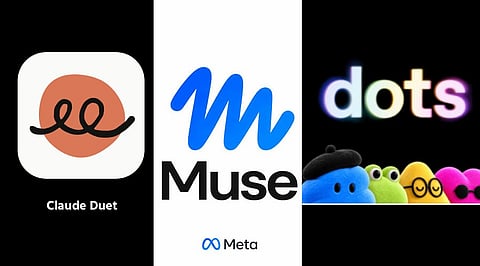
AI agents are moving past answering questions to handle work tasks, manage daily plans, review information, and carry out steps with less human help. Claude Duet, Meta Muse, and OpenAI Dots all follow that path, but each is built for a different job: office work, personal errands, and long-running projects.
Anthropic introduced Claude Duet on October 21, 2026, as a proactive agent built around Claude Opus 5.5. It can prepare morning briefs, check connected apps at set times, and handle tasks in the background to help professionals manage work with less effort.
Duet can review emails, check calendars, prepare business documents and help create reports or forecasts. It draws on Claude’s memory, skills, and connected apps, and Anthropic claims support for more than 6,000 connectors and plugins, though features vary by service. The research preview needs a waitlist and is limited to eligible Pro and Max subscribers in the United States. Usage limits are shared with other Claude tasks.
Meta launched Muse on September 8, 2026, as a personal agent powered by Muse Spark. It aims to help with everyday needs such as travel plans, shopping, bookings and household tasks, using personal preferences and long-term goals to suggest ideas and turn plans into action.
Muse runs through the Muse app and WhatsApp, which keeps access simple for people already using Meta’s services. The company also describes browser-based actions and a secure virtual machine for agent tasks.
A separate Sentinel agent checks outbound actions, and users can set service permissions. Meta says users can opt out of having their interactions used for AI model training. The first rollout targets the United States, so access may differ by region.
Also Read - CHRO Framework: How to Redesign Jobs Around AI Agents and Human Skills
OpenAI introduced Dots on September 29, 2026, as persistent agents powered by GPT-6 Astra. They focus on tasks that take several steps and may run over a long period. Each Dot can use its own cloud computer and connect with tools such as ChatGPT, Slack and Microsoft Teams.
Dots can research a topic, test software fixes, revise launch materials, update analysis and coordinate work across teams. OpenAI claims support for more than 4,000 apps, though access depends on the service, user permissions and plan. Custom rules can allow, block, or require approval for certain actions. Research tools use read-only access, and Activity View lets users review background work. Availability depends on plan eligibility and market.
Greater freedom brings greater risk. An agent may reach private files, send messages or act on a wrong instruction. Claude Duet requires approval for major actions such as payments, message sends, document signatures, and file deletion, and some financial actions stay off-limits even with approval.
Meta Muse relies on its Secure VM and Sentinel checks to control outbound actions, while OpenAI Dots offers rules for approval, access and blocked tasks. Each approach is meant to limit mistakes, but no design guarantees perfect safety. Users and businesses still need to check permissions, review results and keep sensitive data out of reach.
Claude Duet suits experienced professionals, consultants and small-business teams who want help with emails, reports, calendars and everyday office work. Meta Muse targets people who want one assistant for shopping, travel, bookings and personal schedules. OpenAI Dots looks like the better tool for those running larger projects in research, software development, analysis and team coordination.
No common independent evaluation yet shows that any of these agents is the best at every task. Task precision, error recovery, cost and the amount of human supervision all matter. Subscription price alone also hides the real cost, since usage limits or paid services can add expenses.
Why this Matters
AI agents mark a major shift in how people use technology. Instead of simple answers, these tools can handle tasks, manage plans, and support complex projects. Their growth may save time, cut routine work, and boost productivity. At the same time, accuracy, privacy, cost, and human control remain key concerns.
Each product handles a different kind of work: Claude Duet centres on professional judgment, Meta Muse on personal help and OpenAI Dots on finishing projects. Their value will depend on how well they follow instructions, protect private data, recover from errors and complete tasks without constant correction. The strongest agent won’t be the one that does the most. It will be the one that delivers the right result with the least risk and effort.
1. What is Claude Duet?
Claude Duet is Anthropic’s AI agent, designed to support professional work through task automation, morning briefs, connected apps, and background tasks.
2. What is Meta Muse?
Meta Muse is a personal AI agent powered by Muse Spark that helps with travel plans, shopping, bookings, and daily tasks.
3. What are OpenAI Dots?
OpenAI Dots are persistent AI agents designed to handle multi-step projects across tools such as ChatGPT, Slack, and Microsoft Teams.
4. Which AI agent is best for business tasks?
Claude Duet may suit professionals who need help with emails, reports, calendars, and office tasks. OpenAI Dots may fit larger projects that involve research, software, and team tools.
5. Are Claude Duet, Meta Muse, and OpenAI Dots safe to use?
All three offer security controls, but users should review permissions, check important results, and require approval for sensitive actions. No AI agent guarantees perfect accuracy or safety.
